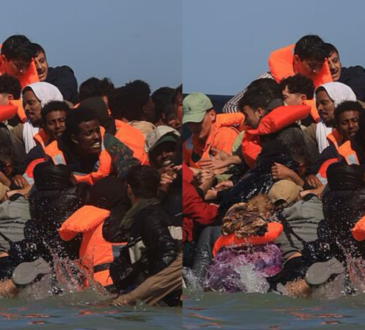
Shocking Pictures Show How Migrant ‘Small Boats’ Have Grown From Carrying Just 3 People to a Record 230


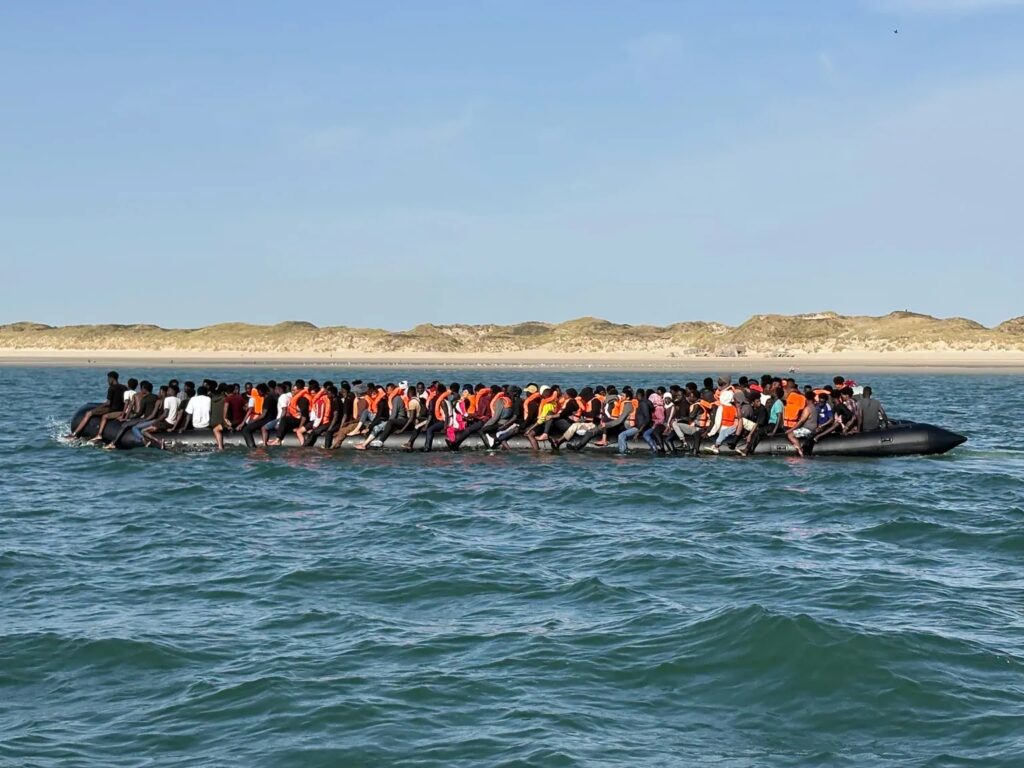
New pictures have shown how much the small boats used to cross the English Channel have grown in recent years. Some of the boats are now large enough to carry as many as 230 people at one time.
The average number of migrants travelling in each boat has risen almost tenfold since 2018. Smuggling gangs are placing more people inside the vessels as they try to make more money from every crossing.
Pictures taken in 2018 showed just three migrants sitting inside a small inflatable boat. This is very different from the huge 49-foot dinghy used for a Channel crossing on Monday. Around 260 people reportedly tried to board the boat, although 230 eventually made the dangerous journey.
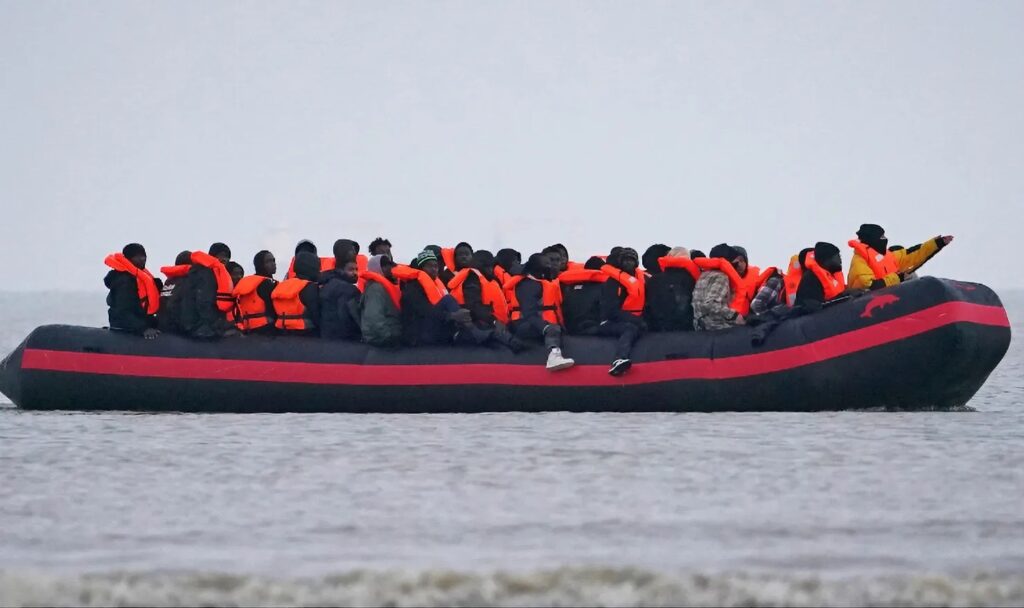
The boat was carrying more passengers than an average EasyJet flight. This shows how much the vessels have changed. About a decade ago, many migrants arrived in small rowing boats or canoes. Today, the dinghies are much larger, usually have engines and are designed to carry far more people.
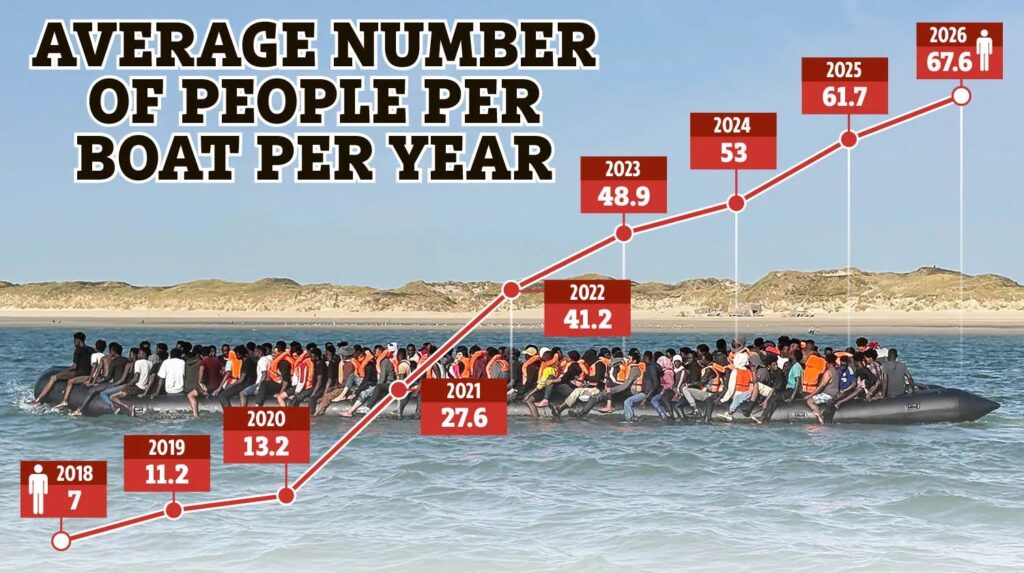
The average number of people travelling in each boat has increased from seven in 2018 to 67.6 in 2026. Monday’s arrival of 230 people also broke the previous record of 165 migrants on a single boat, which had been set only last month.
Prime Minister Andy Burnham has now admitted that the Government needs to change its approach. More than 3,000 migrants have crossed the Channel since he became Prime Minister. His comments came less than two weeks after he said the Government’s plan to tackle small-boat crossings was working.
Mr Burnham has also said that wealthier areas should play their part in housing asylum seekers. He argued that poorer communities should not be expected to carry most of the responsibility. He said every part of the country must have a role in providing accommodation.
Shadow Home Secretary Chris Philp described the growing number of crossings as a serious border crisis under Mr Burnham’s leadership.
Border Security and Asylum Minister Anna Turley defended the Government’s plans. She said the proposals were about fairness and insisted that no community would be asked to accept more asylum seekers than it could manage.
She explained that the Government would consider the size of each area, its local services and the effect that asylum accommodation could have on residents. She said officials would decide what was reasonable and manageable for each community.
The Government also announced that another 13 asylum hotels had closed, including the Grande Metropole in Blackpool. Ms Turley said places such as Blackpool, where property is cheaper, had already taken their fair share of asylum seekers.
She said placing large numbers of asylum seekers in these communities had created a heavy burden and caused serious unrest. The Government believes that moving people to more suitable locations and spreading accommodation across the country would be fairer.
Reform UK leader Nigel Farage strongly criticised Mr Burnham’s handling of the crisis. He claimed the Prime Minister did not have the courage to take the necessary action to stop the boats. Mr Farage said previous Conservative prime ministers had also promised action but failed to solve the problem.
New Home Office figures showed that French authorities stopped fewer than one-third of the migrants who attempted to cross the Channel last week. French officers prevented 472 people from launching their boats, but another 1,176 managed to leave the beaches.
Pictures appearing to show French police watching as migrants entered the sea have led to calls for Britain to withhold some of the money being paid to France.
However, Mr Burnham defended the agreement with the French authorities. He said there were now more police and security officers operating on the French side of the Channel than there were last summer.
He claimed the payment-by-results agreement had helped reduce the number of crossings. However, he admitted that the current results were still not good enough and that further action was needed.