Labour Minister Reveals Why Housing Asylum Seekers on Military Bases Is a Priority

The Labour Government has announced the closure of 13 more hotels being used to house asylum seekers, bringing the total number closed since the beginning of the year to 44.
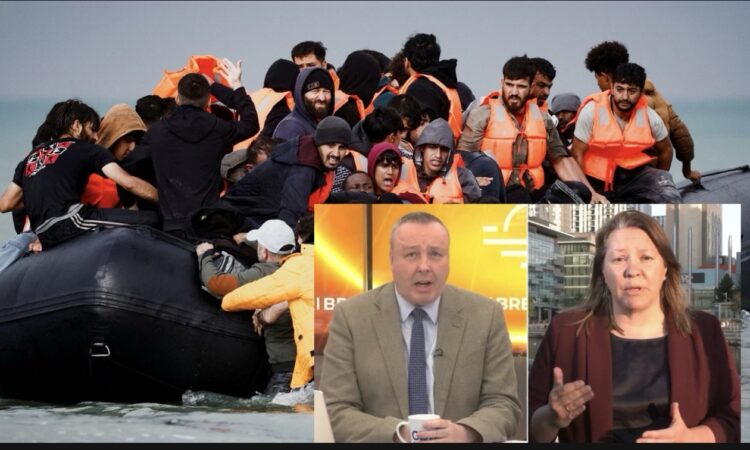
However, a heated debate broke out on GB News after Home Office Minister Anna Turley said the Government’s main priority was to move asylum seekers from hotels into military bases.
During the interview, presenter Ellie Costello asked Ms Turley where people would be taken after leaving the hotels. The minister said military sites were the Government’s preferred option because they were more secure, easier to manage and placed less pressure on local communities.
Ms Turley said she was pleased that another 13 hotels had closed. She added that fewer than 160 asylum hotels were now operating, compared with a peak of around 400 under the previous government.
She explained that the public had repeatedly called for the hotels to close because they were expensive and unsuitable for long-term accommodation. She also said some towns and cities had faced significant pressure because large numbers of asylum seekers had been placed in their areas.
According to Ms Turley, using military bases could help reduce that pressure. She argued that the sites were secure and self-contained, meaning asylum seekers could receive services in one controlled location instead of being spread throughout nearby communities.
But GB News reporter Mark White challenged her claim that military bases were the Government’s priority. He described the statement as misleading and pointed out that only a few thousand asylum seekers were expected to be housed at military sites.
Mark argued that close to 100,000 asylum seekers were living in communities, with many staying in houses of multiple occupation, commonly known as HMOs. He asked whether this showed that community accommodation, rather than military bases, remained the Government’s main way of housing people.
Ms Turley replied that two military bases were already operating and that the Government was considering opening three more. However, when Mark asked exactly how many people were currently living at the military sites, she said the figure was probably around 1,500.
She explained that opening the additional bases would take time because the Government must follow the proper process. This includes speaking to local communities, examining planning rules and securing any permission needed before the sites can begin operating.
The minister also revealed that officials were considering other types of medium-sized accommodation. These could include empty office buildings that are no longer being used and student accommodation that may be available.
Ms Turley said the Government wanted to find places that were secure, suitable and less expensive than hotels. She insisted that the aim was to create a more stable asylum accommodation system while reducing the pressure felt by local residents.
She also said closing hotels was only one part of the Government’s wider plan. According to the minister, Labour also wants to reduce the number of people waiting for decisions within the asylum system and prevent more people from entering Britain illegally.
Ellie Costello then questioned whether military bases were truly solving the problem. She raised concerns about the proposed site near Piddington, where a village of around 350 residents could have accommodation for approximately 1,250 asylum seekers nearby.
The presenter suggested that placing such a large number of people close to a small village could create new concerns, even if the asylum seekers were housed inside a military site.
Ms Turley continued to defend the plan. She said military bases were secure, separate from surrounding communities and already had some of the facilities needed to support people living there.
She acknowledged that residents could feel frustrated or worried but said the Government had to make the asylum system fairer. She argued that asylum seekers could not continue to be placed mainly in the same towns and cities, especially in places where public services were already under strain.
The minister said military sites would allow asylum seekers to be housed and managed in one location while their cases were being processed. She maintained that this would reduce their direct impact on surrounding communities and make it easier for officials to control the accommodation system.
However, Mark’s questioning highlighted the large difference between the number of asylum seekers currently living on military bases and the much greater number being housed within communities.
The exchange raised further questions about where people leaving the 13 closed hotels will actually be moved and whether the Government has enough military accommodation available to make its plan work on a much larger scale.