UN Reveals What Happened After A Migrant Boat Carrying More Than 180 People Disappeared At Sea After Spending Weeks In The Water

Two children are recovering in hospital after losing their entire families during a heartbreaking migrant boat disaster that has left 144 people dead or missing at sea, according to the United Nations.
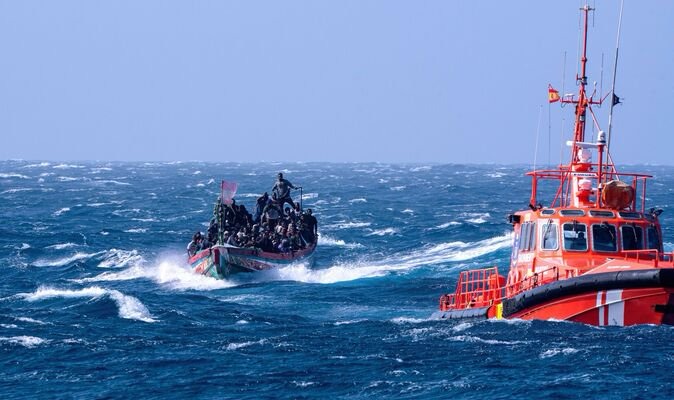
The overcrowded boat had been travelling along the dangerous Atlantic migration route from West Africa to Spain’s Canary Islands. It is one of the world’s deadliest sea crossings, where thousands of people risk their lives every year in the hope of reaching Europe.
The journey began in Bufuloto, The Gambia, with the boat setting off on a voyage of around 905 miles. However, instead of reaching its destination, the vessel drifted helplessly at sea for 25 days.
When rescuers finally reached the boat during an operation off the coast of Mauritania, only 38 people were found alive. The UN said that 143 other passengers were either confirmed dead or remain missing and are feared to have died. Among the survivors were two children who had lost every member of their family during the tragedy. They are now being cared for in hospital alongside the other survivors.
The disaster was part of a series of rescue operations carried out during July. In a separate incident, another migrant died before a rescue boat reached the vessel. That boat was brought safely to shore on July 14.
Between July 14 and July 18, rescue teams working from the Mauritanian port city of Nouadhibou safely brought 387 migrants of different nationalities ashore after intercepting several boats.
UNHCR spokesperson Matthew Saltmarsh said the latest tragedies show the terrible human cost of these dangerous migration routes. He said the refugees and migrants were reported dead or missing after trying to make the risky sea journey from West Africa to Europe.
The Atlantic route to the Canary Islands is considered one of the most dangerous migration crossings in the world. Many of the boats used are small, overcrowded and not built for long journeys across the open ocean. They often travel through rough seas and changing weather, while rescue teams may be hundreds of miles away when emergencies happen.
Smuggling gangs continue to make large amounts of money by putting desperate people onto unsafe boats with little food, water or safety equipment. Many passengers spend weeks at sea before being rescued, while others never arrive.
Although the number of people reaching the Canary Islands has fallen this year, the UN says the danger has not gone away. As of July 15, around 4,400 migrants had arrived on the islands, a drop of 61% compared with the same period in 2025.
The UNHCR said these recent deaths are a reminder that many refugees and migrants are still risking their lives on extremely dangerous journeys, with some setting off from places more than 2,000 kilometres away from where they hope to arrive.
So far this year, authorities have recorded 17 rescue and disembarkation operations in the Mauritanian cities of Nouadhibou and Nouakchott, with a total of 2,147 people brought safely ashore.