“We Don’t Want Asylum Seekers in Our Community” — Village Threatens Drastic Action After Residents’ Pleas Are Ignored Over Plans to House 930 Male Asylum Seekers Near Their Homes


Residents of a small village in Suffolk are preparing to vote on whether they should leave the United Kingdom after becoming frustrated with government plans to house nearly 1,000 male asylum seekers near their homes.
People living in Barnham say they feel ignored by the Home Office despite repeatedly raising concerns about the proposals. They are now planning to hold their own referendum to show how strongly they oppose the government’s decision.
The vote is expected to take place tomorrow, with the result likely to be announced by early evening.
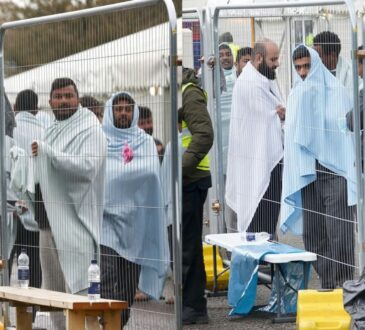
The disagreement began after the Home Office announced plans to turn a former RAF base near Thetford, Norfolk, into accommodation for up to 930 single male asylum seekers.
The site is about three miles from Barnham, a small village with fewer than 600 residents.
Last month, the government signed a £3.4 million contract with construction company Kier as part of preparations for the proposed accommodation.
The former military base was once used to store nuclear weapons. The Home Office identified it for possible asylum accommodation in June and plans to use the site for at least ten years.
However, many residents believe their village is too small to cope with such a large number of people arriving nearby.
They say Barnham has only one primary school, no shop and no pub, and they are worried about the possible effects on their community.

The Home Office is also considering using a special planning process that would allow the government to move ahead without following the usual local council approval process.
This has caused further anger among residents, who believe their concerns are not being taken seriously.
The planned referendum follows a similar protest in Piddington, Oxfordshire, where villagers voted in September to leave the UK after opposing plans to house up to 1,256 male asylum seekers at a former military site.
Although such a vote cannot legally remove a village from the United Kingdom, Barnham residents hope it will attract national attention and put pressure on the government.
Helen Beck, chairman of the Barnham Residents Association, said the referendum is intended to be a peaceful way of showing the government’s failure to listen to local people.
She explained that residents are not turning against the King or the country but want greater control over decisions affecting their village.
She also pointed out that Barnham had previously played an important role in protecting Britain by allowing nuclear weapons to be stored nearby.
According to her, the village accepted that responsibility for the good of the country, but residents now feel the government is ignoring their concerns.
John Bauer, chairman of the parish council and one of the organisers of the vote, said villagers remain loyal to the King and Britain but believe it is time for their community to have more control over its future.
He described the referendum as a serious protest rather than a publicity stunt.
Bauer said residents want people across the country and around the world to understand why they are unhappy with the plans.
He admitted that challenging the government would not be easy but insisted that villagers would continue speaking out.
Some residents have already started protesting outside the former RAF base.
A protest camp has been set up near the entrance, where people take turns displaying signs opposing the proposals.
Some of the signs read “Thetford says no!” while others accuse the Home Office of failing to tell residents the truth.
One resident, identified only as Kim, said she moved to Barnham from north London 13 years ago because she wanted a quieter and safer place to raise her children.
She explained that her family accepted a lower income to enjoy village life and give their children a better childhood.
However, she now fears the government’s plans could affect the peaceful environment they moved there to enjoy.
Kim said children in the village currently enjoy playing outside because neighbours know one another and look out for each other.
She worries that bringing hundreds of unfamiliar people into the area could change that.
She also questioned whether enough security would be provided for local residents.
Another resident, Charles Day from Thetford, said he felt sorry for people living in Barnham and the surrounding communities.
He questioned why the Prime Minister could not simply reject the plans.
The former RAF Barnham site is one of three former military locations being considered by the Home Office to accommodate a total of around 3,750 asylum seekers.
The government says it wants to use these sites to provide accommodation, but the proposals have faced strong opposition from people living nearby.
For Barnham residents, the main concern is that such a major decision could be made without their agreement.
The referendum will not have the legal power to make Barnham independent from the UK, but organisers believe it will send a strong message to ministers.
The Home Office is expected to make a formal planning decision about the former RAF Barnham site, while residents continue their campaign against the proposals.