Judges smack Donald Trump with unexpected threat on ‘unlawful’ election meddling

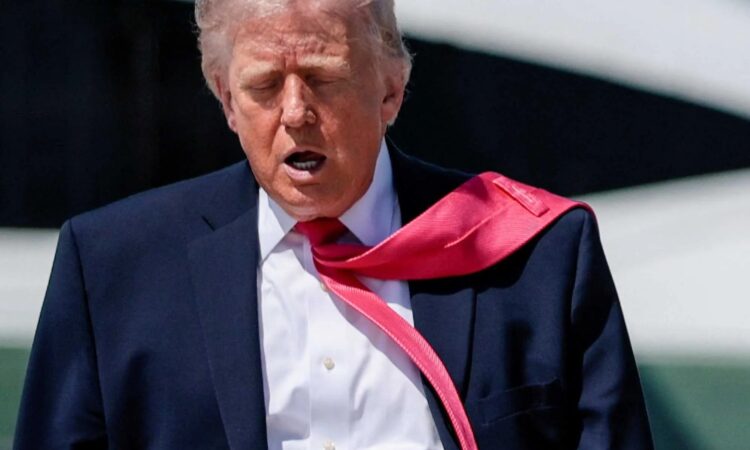
A federal appeals court has handed President Donald Trump a legal victory, but at the same time warned that his executive order on mail-in voting could still be stopped almost immediately if the administration tries to put it into action.
The U.S. Court of Appeals for the District of Columbia ruled on Tuesday that the lawsuit challenging the order was filed too early because the groups bringing the case had not yet suffered enough direct harm for the court to step in. As a result, the judges dismissed the case for now rather than deciding whether the order itself is legal.
The legal challenge was brought in April by the Democratic Senatorial Campaign Committee, together with several Democratic organisations and members of Congress. They argued that the U.S. Constitution gives the power to run elections to Congress and individual states, not the White House, and claimed the president had gone beyond his legal authority.
Trump’s executive order directs the U.S. Postal Service to stop delivering mail-in ballots to people whose names do not appear on citizenship records held by the Department of Homeland Security. Supporters of the order say it is aimed at protecting election integrity by preventing non-citizens from voting.
However, critics argue that the policy could wrongly affect millions of eligible American voters. According to the Brennan Center for Justice, many lawful voters could have their ballots withheld without ever being told why, leaving them unable to vote despite being legally entitled to do so.
Although the appeals court ruled in Trump’s favour on this procedural issue, the judges made it clear that they could still intervene if federal agencies actually attempt to enforce the order. The court said that if the administration tried to make major last-minute changes to state election systems before the upcoming elections, and those actions were found to be unlawful, a court could quickly block them. The judges explained that such an injunction would simply preserve the current voting system without creating major legal or constitutional problems.
The ruling means the order has not been declared lawful or unlawful. Instead, the court said the legal challenge was premature because the feared actions had not yet taken place.
Meanwhile, Trump’s legal battle over the order continues in other courts. A separate federal appeals court, the First Circuit in Boston, recently blocked the executive order from taking effect in 23 states while legal challenges continue.
The issue has also raised concerns for military personnel. Around three-quarters of the approximately 1.3 million active-duty U.S. service members are eligible to vote by mail, and opponents of the order argue that the new restrictions could prevent some military ballots from being counted.
Democratic leaders strongly criticised the executive order, accusing Trump of trying to make it harder for certain groups to vote, including senior citizens, people with disabilities, military personnel, rural communities and other Americans who rely on mail-in voting. They described the order as unconstitutional and pledged to continue fighting it in court.
Trump has defended the measure since signing it in March. He argued that mail-in voting has been vulnerable to cheating and claimed that stronger safeguards are needed to protect election integrity.
The legal dispute may now end up before the U.S. Supreme Court. On Monday, the Department of Justice filed an emergency appeal asking the justices to allow the executive order to take effect before the November midterm elections, setting the stage for what could become one of the most closely watched election law cases of the year.