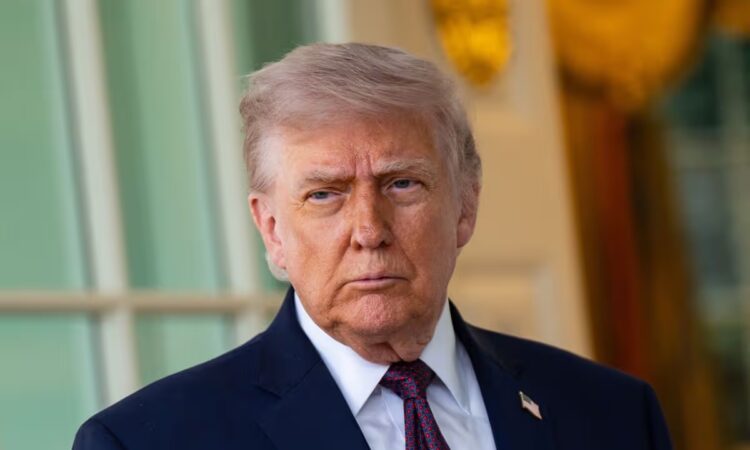
US President Donald Trump is facing fresh criticism over his decision to order military attacks on boats suspected of carrying illegal drugs. A former federal prosecutor has argued that the attacks could provide grounds for Trump to face impeachment for a third time.
The controversy centres on a series of military operations launched by the Trump administration against vessels travelling through the Caribbean Sea and the Eastern Pacific Ocean. The US government says the operations are part of its efforts to stop dangerous drugs from reaching American communities.
However, critics believe the military has gone too far by killing people suspected of drug trafficking without first arresting them or giving them an opportunity to defend themselves in court.
The former prosecutor, who previously worked as an assistant US attorney in Miami for more than six years, raised serious concerns about the legality of the attacks in an article published by Slate.
He explained that during his time prosecuting drug smugglers, American authorities regularly monitored suspicious boats using aircraft and special cameras. However, instead of immediately destroying the vessels, officers would usually stop them, search for illegal drugs, arrest those involved and bring the suspects before a court.
According to him, the approach taken under Trump is very different because military forces have been destroying suspected drug boats, sometimes killing everyone on board before investigators can establish what the vessels were carrying.
The military campaign reportedly began on September 2, 2025, when American forces carried out an attack against a boat suspected of transporting drugs.
Since then, the operations have continued, with the Pentagon describing them as military strikes against suspected drug trafficking organisations.
According to figures cited in the article, US forces had attacked 70 vessels and killed 234 people by September 19, 2026.
One particularly controversial incident involved people who reportedly survived an initial attack and were left holding on to the remains of their damaged boat.
The article states that American forces later returned and killed the survivors following an order from Navy Admiral Frank “Mitch” Bradley.
The incident has raised serious questions about whether military personnel were acting within the law and whether those who survived should have been rescued and arrested instead.
The former prosecutor argued that being suspected of committing a crime does not automatically give law enforcement officers permission to kill someone.
He explained that under American law, officers are generally allowed to use deadly force only when they reasonably believe a suspect poses an immediate threat of death or serious injury.
He believes similar principles should apply when American forces confront suspected drug smugglers at sea.
According to the article, there has been no clear public evidence that the boats targeted during these operations were carrying weapons or posed an immediate danger to American military personnel.
The writer also questioned how people travelling in small boats could threaten military aircraft or drones operating above them.
He argued that some of those killed might not even have known American forces were nearby before their vessels were attacked.
Another major concern is the lack of publicly available evidence proving that every targeted boat was actually transporting illegal drugs.
The former prosecutor explained that when officers arrest suspected smugglers, they can search their boats and collect evidence that may later be presented in court.
However, when a boat is destroyed and its occupants are killed, investigators may lose valuable information about what happened and who was involved.
He suggested that this makes it difficult for the public to know whether the people killed were genuinely involved in drug trafficking.
The Trump administration has defended its actions by arguing that dangerous drug trafficking organisations pose a serious threat to the United States.
Officials have linked the military campaign to efforts to fight powerful criminal groups accused of supplying illegal drugs that have contributed to thousands of deaths across America.
The administration has also argued that some drug cartels operate like terrorist organisations and should be treated as serious national security threats.
According to the article, the Justice Department prepared a legal memorandum supporting the administration’s position.
The legal argument reportedly suggests that certain drug trafficking organisations are involved in an armed conflict with the United States and that military action against their members can therefore be justified.
However, several legal experts have challenged this explanation.
They argue that involvement in drug trafficking does not automatically make someone a lawful military target, even when the organisation concerned is dangerous or responsible for serious crimes.
The article also refers to a United Nations report that questioned the legality of the boat attacks and warned that they could amount to crimes against humanity.
The former prosecutor believes the operations could violate American criminal law, military law and international legal standards.
He argued that the situation is especially serious because the attacks are not simply the result of individual officers making difficult decisions during dangerous encounters.
Instead, he described them as part of a planned government policy in which suspected drug boats are deliberately targeted and destroyed.
The writer also questioned whether the campaign is achieving its stated purpose of reducing the amount of illegal drugs entering the United States.
He explained that fentanyl, one of the most dangerous drugs affecting American communities, largely reaches the country through supply routes connected to Mexico.
Many of the boats targeted by American forces, however, have reportedly been travelling from South American countries, including Venezuela.
The article notes that Venezuela is often used as a transit point for cocaine shipments heading towards other parts of the world, including Europe and Africa.
For this reason, the former prosecutor argued that destroying boats in the Caribbean may have little effect on the supply of fentanyl reaching American communities.
He also warned that killing suspected smugglers could make it harder for investigators to identify the powerful criminal networks responsible for organising international drug trafficking.
When suspects are arrested alive, investigators can question them about the people who employed them, the routes they used and the organisations financing their activities.
Such information can help authorities investigate and prosecute senior figures who control large drug operations.
However, destroying boats and killing their occupants could mean losing evidence that might otherwise help dismantle those criminal organisations.
The writer also accused Trump of taking an inconsistent approach to drug-related crimes.
He pointed to the president’s decision to pardon Ross William Ulbricht, who was serving a life sentence for operating Silk Road, an online marketplace associated with illegal drug sales and other criminal activities.
He also highlighted Trump’s decision in December 2025 to pardon former Honduran President Juan Orlando Hernández.
Hernández had previously been convicted in the United States over his involvement in a major cocaine trafficking operation.
According to the former prosecutor, these pardons raise questions about why the administration has shown mercy to people convicted of serious drug-related offences while authorising deadly attacks against others who have not been convicted.
The writer believes the issue goes beyond America’s fight against illegal drugs.
He warned that allowing the military to kill suspected criminals without sufficient legal justification could create a dangerous example for future presidents.
He argued that military personnel have a responsibility to follow lawful orders and that government officials should not be able to avoid accountability simply because an operation was approved at the highest level.
The controversy has also brought renewed attention to the US Supreme Court’s 2024 ruling on presidential immunity.
That decision gave presidents broad protection from criminal prosecution for certain official actions carried out while in office.
Justice Sonia Sotomayor strongly criticised the ruling at the time, warning that it could protect presidents from prosecution even in extremely serious situations involving the misuse of presidential power.
The former prosecutor suggested that the immunity ruling could make it extremely difficult to prosecute Trump personally over the boat attacks.
However, he argued that impeachment remains a possible constitutional way to hold a president accountable for serious misconduct.
Under the American Constitution, a president can be impeached for treason, bribery or other high crimes and misdemeanors.
The writer believes that if the military operations are found to involve unlawful killings, they could meet the standard for impeachment.
Nevertheless, he acknowledged that pursuing impeachment over the boat attacks would be politically difficult.
Many Americans are deeply concerned about illegal drugs and the damage caused by powerful trafficking organisations.
Some members of the public also support strong military action against drug cartels, particularly when the groups are described as terrorist organisations.
The article cited a poll showing that 48 percent of respondents supported military attacks on boats carrying suspected drug smugglers.
This public support could make it harder for lawmakers to build a successful impeachment case based on the operations.
The former prosecutor therefore suggested that Congress should first conduct a detailed and public investigation into the military campaign.
Such an investigation could examine the evidence used to identify suspected drug boats, the legal advice given to military commanders and the circumstances surrounding the deaths of those targeted.
It could also help determine whether the attacks were necessary, whether suspects could have been arrested and whether the operations complied with American and international law.
He argued that any future impeachment effort should include the boat attacks only if there is strong public support for accountability and the allegations form part of a wider case involving the president’s conduct.
For now, the Trump administration continues to defend its approach to fighting drug trafficking, while critics maintain that the government must respect the law even when dealing with suspected criminals.
The growing disagreement raises a wider question about how far a president should be allowed to go in the name of protecting national security.
Although stopping dangerous drugs from entering the United States remains an important government responsibility, the former prosecutor argues that the fight against organised crime should not come at the expense of legal protections and accountability.
Whether Congress will investigate the operations further or consider them as grounds for another impeachment remains uncertain.