Boris Johnson Reveals His Great-Great-Grandmother Was Sold as a Slave When She Was Just a Child, But What He Said After the UK Government Opened the Door to Slavery Reparations Has Left Many People Talking

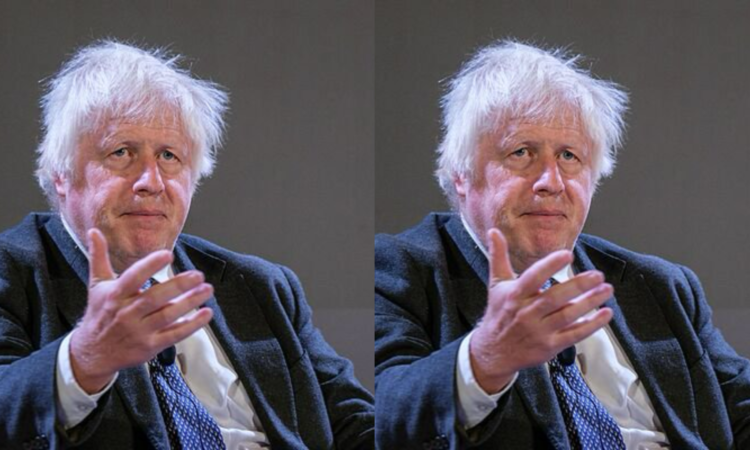
Former UK Prime Minister Boris Johnson has strongly criticised plans to pay compensation over Britain’s involvement in slavery. He has also revealed that his own great-great-grandmother was sold as a slave when she was a child.
Johnson criticised Prime Minister Andy Burnham over his willingness to consider an official apology for Britain’s role in the slave trade and discuss ways of making amends. He described the idea of paying compensation as madness and warned that it could cost British taxpayers hundreds of billions of pounds.
Writing in his Daily Mail column, Johnson shared details about his family’s past. He said research into his family history showed that his great-great-grandmother, Hanife Feride, was sold at a slave market in Istanbul during the 19th century.
According to Johnson, she was a Circassian refugee who had fled violence linked to Russian expansion in the Caucasus region. She was taken across the Black Sea before being put up for sale at Istanbul’s Grand Bazaar.
He explained that a Turkish woman eventually bought her and that she was married to a 43-year-old businessman when she was just 13 years old.
Johnson said the discovery confirmed that his family had a direct connection to slavery, something he had not previously discussed in such detail.
However, he used his family’s history to question whether people living today should receive compensation for the suffering of their ancestors.
He asked whether anyone seriously believed that his own family, which he described as large and generally wealthy, deserved money from taxpayers because of what happened to his great-great-grandmother.
Johnson argued that although his ancestor suffered a terrible injustice, it would make little sense for him to receive money today because of her experience.
He also criticised Burnham over plans to begin a year-long discussion about how Britain could address its historical involvement in slavery.
The Prime Minister has announced £40 million in support for Caribbean countries and said he is willing to consider making an official apology for Britain’s role in the transatlantic slave trade.
Johnson described the government’s approach as a serious mistake. He warned that even discussing compensation could encourage demands for much larger payments in the future.
He claimed that British taxpayers could eventually face demands running into hundreds of billions of pounds if the government accepted responsibility for actions committed centuries ago.
The former Prime Minister also criticised the Church of England, which has established a £100 million fund to address its historical connections to slavery.
Johnson questioned why people living today should be expected to pay for actions carried out by previous generations.
He argued that Britain should not pay compensation to the descendants of enslaved people, saying that doing so could create a situation in which almost anyone with a family history of suffering might demand financial support.
He pointed to Britain’s long history of military involvement around the world, claiming that the country had invaded 171 of the 193 United Nations member states at some point in history.
According to Johnson, accepting the principle of compensation for historical wrongdoing could leave Britain facing demands from many countries for generations to come.
The disagreement follows a change in the government’s approach to demands for an apology over the transatlantic slave trade.
Burnham has ruled out making direct cash payments as slavery reparations, but he has said the government is open to an official apology and further discussions about how Britain can recognise and address its historical role.
His announcement has received mixed reactions.
Some Caribbean leaders and campaigners believe the proposed £40 million support package does not go far enough. They argue that countries affected by slavery deserve more meaningful action to address the lasting damage caused by the slave trade.
Others, including Johnson, believe that making an official apology could encourage further financial demands against Britain.
Critics have warned that compensation claims could eventually reach hundreds of billions of pounds, although no such payments have been agreed by the government.
The disagreement has also brought the Royal Family into the discussion ahead of a Commonwealth summit in Antigua and Barbuda.
There have been calls for King Charles and the British government to formally apologise for Britain’s involvement in the transatlantic slave trade.
However, Buckingham Palace has made it clear that the King’s position as head of the Commonwealth is focused on bringing countries together and encouraging cooperation rather than making government policy.
The debate continues to divide opinion, with some people calling for Britain to take greater responsibility for its history, while others argue that people living today should not be financially responsible for the actions of their ancestors.
Johnson remains strongly opposed to compensation payments, insisting that his own family’s experience shows why he believes the idea is unfair.