Home Secretary Shabana Mahmood Reveals Plan to Allow More Refugees to Come to the UK and Settle But They Must Meet These Conditions

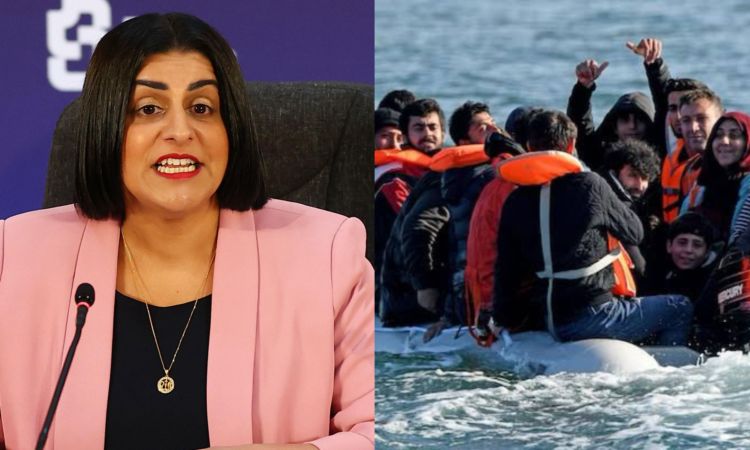
Home Secretary Shabana Mahmood has announced that the government will reopen a legal refugee resettlement scheme, allowing more people fleeing war and persecution to come to the UK through safe and legal routes.
Mahmood said Britain has a responsibility to meet its international obligations while also making sure immigration remains controlled.
Speaking at the Labour Party conference in Liverpool, she said the government wants to create a system that is fair to refugees, people who migrated to Britain legally and British citizens.
Under the plan, the UK Resettlement Scheme will reopen immediately. Around a quarter of the people expected to enter Britain through the scheme will be Palestinians and women and girls from Afghanistan.
The decision represents a change in direction after an Afghan resettlement route was closed last year.
At first, hundreds of refugees are expected to arrive through the main resettlement programme and three community sponsorship routes. The government expects the number to eventually increase to the low thousands as illegal migration falls.
However, Mahmood stressed that the programme will not be unlimited. The government plans to set a cap each year on how many refugees can enter Britain through the scheme.
People accepted through the resettlement programme will be placed on a five-year route towards permanent settlement in the UK.
Most refugees coming through the main UK Resettlement Scheme will be referred by the United Nations refugee agency, UNHCR. Palestinians are expected to be referred through the International Refugee Assistance Project.
Mahmood said she believes British people still want the country to show compassion towards people escaping wars, violence and persecution.
She said the government believes Britain can help vulnerable people while at the same time restoring control of its borders and reducing the number of people crossing the English Channel in small boats.
The Home Secretary also spoke about controversial plans to change the rules surrounding indefinite leave to remain, which allows people to permanently settle in Britain.
She acknowledged that some people have criticised parts of the proposed reforms and argued that they are unfair.
Mahmood said the government would continue consulting before making its final decision. She said the aim is to create a system where permanent settlement is earned by people who have shown a consistent commitment to Britain.
She also said the government must consider fairness towards people who came to the UK legally as well as fairness towards British citizens.
A Home Office source said the government’s official position on the settlement reforms will be announced in the autumn. Mahmood’s speech explained the principles behind the changes, but did not confirm exactly what the final rules will look like.
Mahmood also spoke about her own family’s migration story.
She said her parents came to Britain from rural Kashmir because they believed they would have a better opportunity to build a successful life in the UK.
According to Mahmood, her parents were largely welcomed because many British people believed it was right to accept people who came legally, worked, built a life and contributed to the country.
However, she said that compassion must be combined with limits.
Mahmood stressed that the number of refugees entering through legal routes must be controlled and capped. She also said local communities need to have the ability and resources to welcome and support people arriving through the schemes.
The government is also preparing other legal routes for refugees.
The first refugees sponsored directly by local communities and students sponsored by universities are expected to arrive from autumn 2027.
Applications for another route allowing employers to sponsor refugees are expected to open in spring 2027, with the first people using that programme expected to arrive later that year.
The announcement has already attracted strong criticism from opposition parties.
Conservative Shadow Home Secretary Chris Philp accused Mahmood of giving in to pressure from Labour MPs and criticised the government’s approach to indefinite leave to remain.
He also criticised the decision to create routes for Afghan women and Palestinians, arguing that the schemes could eventually lead to more family members coming to Britain and increase costs for taxpayers.
The Conservatives say they want tougher immigration rules, including reducing low-skilled migration and leaving the European Convention on Human Rights to make deportations easier.
Reform UK’s Home Affairs spokesperson Zia Yusuf also strongly criticised the announcement.
He argued that the plans would lead to more migrants arriving in Britain and said Reform UK would take a much tougher approach if it formed a government.
Despite the criticism, Mahmood defended the government’s approach, arguing that Britain can maintain control of its borders while continuing to provide legal protection to people genuinely fleeing war and persecution.
The government says the aim is to provide controlled legal routes so vulnerable refugees have an alternative to dangerous journeys, while continuing efforts to reduce illegal small-boat crossings.
The key difference, according to the government’s approach, is that the new refugee routes will be organised, limited and subject to an annual cap rather than being left open without restrictions.