
Kurdish Asylum-Seeking Family Took Home Office to Court Over Their Small Oxford Home, But What The Judge Decided Was Unexpected

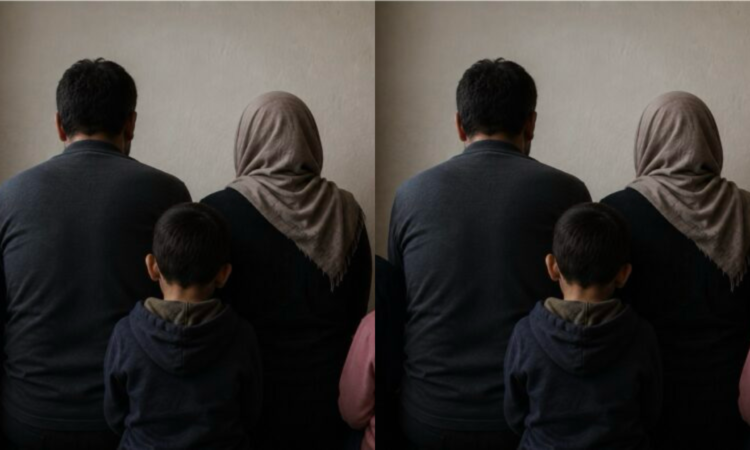
A Kurdish Iraqi family seeking asylum in the UK has lost a court case against the Home Office after asking to remain in Oxford rather than being moved to another part of England.
The family includes two parents and their three children. They have been living in a small two-bedroom flat in Oxford since June 2022, after arriving in the UK from Iraq around two months earlier.
The Home Office accepted that the property was now too small for a family of five and agreed that they needed a bigger home. However, officials did not agree that the new accommodation had to be in Oxford.
Instead, the family was offered larger self-contained accommodation in other areas of England, including Milton Keynes, Canterbury, Battle and Reading.
The parents refused to move because they believed leaving Oxford could seriously affect their family, particularly because of their mental health, their children’s education and the medical support they were already receiving.
One of their children, an eight-year-old boy, has special educational needs that are believed to be linked to trauma he suffered during his journey to Britain. He is also thought to have autism and receives weekly psychotherapy from Refugee Resource, a charity based in Oxford.
His mother also receives regular support from the same organisation. She has been diagnosed with post-traumatic stress disorder, post-natal depression and anxiety, and she attends therapy every week.
The family feared that moving away from Oxford could interrupt this support. They were worried their son might have to change schools and lose contact with the therapists who already understand his needs.
They were also concerned that after moving to a different area, they might have to wait for new mental health services and other support to become available.
Because of these concerns, the family took legal action against the Home Office. They asked the High Court to consider whether the decision to offer them accommodation outside Oxford was lawful.
However, Deputy High Court Judge Alan Bates rejected their case.
The judge explained that the law does not require the Home Office to give asylum seekers accommodation in the location that would be best or most convenient for them.
Instead, the Home Office is required to provide accommodation that is suitable for their basic needs and allows them to live with dignity without becoming destitute.
The judge accepted that staying in Oxford would have several important benefits for the family. He also recognised that moving could create serious difficulties, especially for the mother and her eight-year-old son because of their mental health and support needs.
However, he ruled that these difficulties did not automatically mean that accommodation somewhere else in England would be legally unsuitable.
The judge said many families can experience major disruption when they have to move home. This can include changing schools, leaving communities where they have built relationships and waiting to access services in a new area.
Although these problems can be difficult, the court said they do not necessarily mean that another property offered by the Home Office is legally inadequate.
The family also argued that the Home Office had failed to properly follow its own policy concerning healthcare when moving asylum seekers.
The policy says officials should, where possible, avoid moving people in a way that could negatively affect their mental health when they are already receiving psychological treatment.
However, the judge said this policy did not give the family an automatic right to remain in Oxford indefinitely.
He said practical issues also had to be considered, including the availability of asylum accommodation in different parts of the country.
The Home Office had argued that wanting to remain in Oxford was a personal preference and that officials could not simply provide accommodation in a particular location because an asylum-seeking family wanted to stay there.
The judge said officials could consider important medical circumstances when deciding where someone should live. However, he also found that the Home Office was allowed to set a high threshold before agreeing that an asylum-seeking family must remain in a particular area.
The court also considered the pressure on the UK’s asylum accommodation system and the limited number of suitable properties available.
In the end, although the family presented evidence explaining the problems they could face if they were moved away from Oxford, the judge ruled that the Home Office had acted within the law.
Their legal challenge was therefore dismissed.
The ruling means the Home Office is not legally required to provide the family with larger accommodation in Oxford simply because staying there would be better for their mental health, education and existing support arrangements.
The case shows the difficult decisions that can arise when asylum-seeking families have established important connections with schools, doctors, therapists and local communities but are then offered accommodation somewhere else.
While the court recognised that remaining in Oxford would be highly beneficial for this particular family, it concluded that the law does not require the government to provide the accommodation or location that would give an asylum-seeking family the greatest possible benefit.