Karoline Leavitt Dragged Online for Dismissing Victims, Then JD Vance Drops Epstein Bombshell Confession That Completely Throws Her Under the Bus

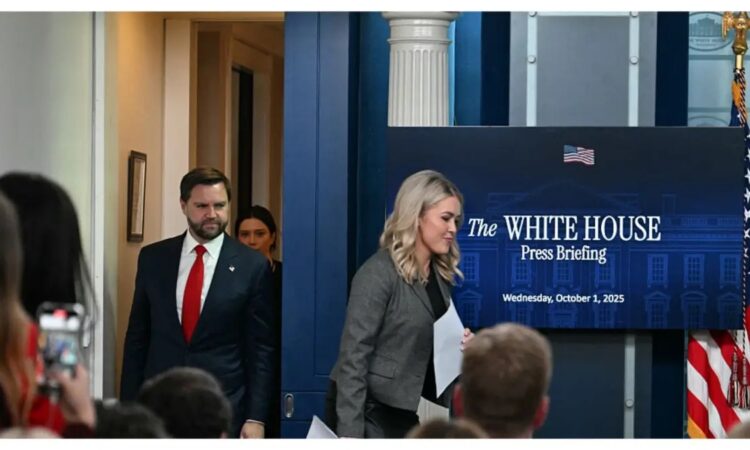
White House Press Secretary Karoline Leavitt has come under fresh scrutiny after an old interview resurfaced online, with critics accusing her of dismissing concerns surrounding the Jeffrey Epstein files and making comments they believe downplayed the experiences of victims.
The clip, originally recorded during a November podcast interview with Miranda Devine, has gone viral again after renewed debate over the release of Epstein-related documents. During the interview, Leavitt argued that the controversy surrounding the files had been exaggerated for political purposes.
She described the Epstein files story as “a classic Washington hoax” and accused Democratic members of the House Oversight Committee of leaking selectively redacted information to CNN in an attempt to damage President Donald Trump politically.
Leavitt claimed that Democrats had provided redacted material to a reporter while failing to acknowledge that an unredacted version of the same document was publicly available. According to her, the full document showed that a woman referenced in the email, who has since died, had repeatedly stated before her death that Trump had never acted improperly toward her.
Her remarks quickly reignited criticism from opponents, who argued that focusing on one witness ignored the wider allegations connected to Epstein and the many women who have spoken publicly about abuse linked to his trafficking network.
Critics also pointed out that several women have made allegations involving Trump over the years. Trump has consistently denied any wrongdoing, and no court has found him liable for crimes connected to Jeffrey Epstein’s trafficking operation.
Leavitt continued by arguing that political opponents were deliberately trying to create another damaging news cycle around the president.
She said Democrats were once again working with what she called “fake news” outlets to build a misleading narrative against Trump, describing it as a familiar political strategy that had been used repeatedly throughout his time in public office.
As the video spread across social media, thousands of users reacted angrily.
Many accused Leavitt of attacking critics while failing to acknowledge victims of sexual abuse. Others claimed her comments appeared insensitive given the seriousness of the allegations surrounding Epstein’s crimes.
One X user alleged that Leavitt was dismissing women who were abused as children for political reasons, while another described her remarks as “tone deaf.”
Others questioned why she appeared more focused on defending the administration than discussing the victims themselves.
Some users also criticised her Christian faith, questioning how she could defend Trump while making those remarks. Others sarcastically suggested that the Epstein story only became a “hoax” once prominent names were allegedly linked to the files.
The resurfaced interview has gained even more attention after Vice President JD Vance acknowledged that the Trump administration mishandled its communication over the release of the Epstein documents.
Speaking during an almost three-hour interview with podcast host Joe Rogan, Vance admitted the administration made significant mistakes in explaining how and when the files would be released.
He said officials “absolutely screwed up” their communication strategy but insisted the mistakes were not part of any attempt to hide evidence from the public.
Vance argued that the administration should have released the documents much earlier to avoid creating unnecessary suspicion.
During the interview, Rogan questioned why there had appeared to be so much resistance to making the records public.
Vance responded by placing much of the blame on former Attorney General Pam Bondi.
He said Bondi had overstated what information the government actually possessed, referring to her earlier comments suggesting an Epstein “client list” was sitting on her desk ready for release. According to Vance, many of the documents she referenced were already publicly available.
He admitted that the confusion damaged public confidence and made people distrust the entire transparency effort.
While insisting he did not believe there had been malicious intent, Vance acknowledged that Bondi’s public statements created unrealistic expectations before the documents were released.
He even described himself as one of the original believers in Epstein conspiracy theories, saying he had spent years examining almost every theory surrounding the case.
Trump later removed Bondi from her position following criticism over the Justice Department’s handling of the Epstein documents and congressional hearings examining why millions of records remained unreleased.
Vance also defended Trump during the interview, saying he had never seen credible evidence linking the president to criminal wrongdoing involving minors.
At the same time, he acknowledged that millions of Epstein-related documents remain under seal despite previous promises of greater transparency.
He said he believes there may still be unanswered questions surrounding the case but stressed that he has no evidence of a cover-up and is not personally withholding any information.
Adding to the political battle over the issue, a group of lawmakers has now introduced the proposed Epstein Files Transparency Act II. The legislation would allow state attorneys general, Epstein’s victims, and members of Congress to sue the Department of Justice if it continues withholding millions of remaining Epstein-related records.