Lawrence O’Donnell Reveals Donald Trump and Republicans’ ‘Poisonous Lies’ Ahead of US Elections,

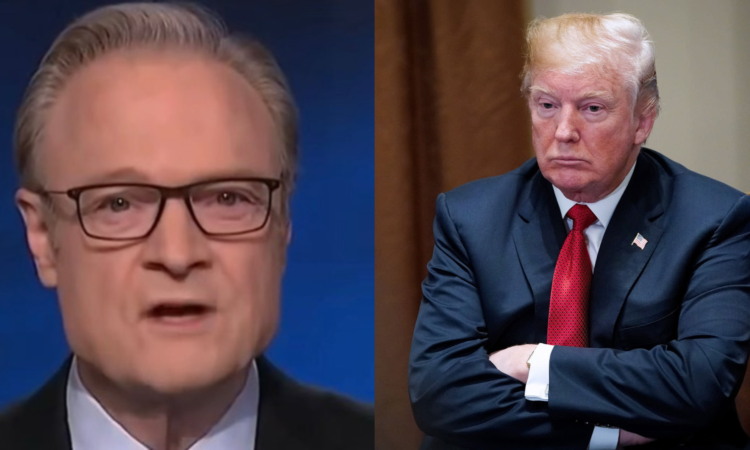
American television host Lawrence O’Donnell has strongly criticised President Donald Trump over his recent comments about Democratic Senate candidate Abdul El-Sayed, warning that the attacks could be remembered as one of the darkest moments in American political history.
Speaking on his programme, “The Last Word,” on Monday, O’Donnell accused Trump and other senior Republicans of spreading harmful and misleading statements about El-Sayed ahead of the US midterm elections.
The television presenter said he was particularly disturbed by comments that appeared to target El-Sayed’s Muslim background. He argued that such remarks had gone beyond ordinary political disagreements and were encouraging unnecessary fear and division among Americans.
O’Donnell began his programme by discussing Trump’s final public appearance before Election Day. Instead of focusing on issues affecting ordinary families, he said the president spent much of his speech defending changes made to the Lincoln Memorial Reflecting Pool in Washington, DC.
According to O’Donnell, Trump appeared more interested in talking about the appearance of the famous landmark than addressing the rising cost of living and other financial pressures facing Americans.
He accused the president of failing to deliver on his earlier promise to bring inflation under control immediately after returning to the White House.
O’Donnell also blamed Trump’s war with Iran for contributing to higher prices, arguing that the president had not given voters the answers they wanted about the economy.
The presenter then turned his attention to a recent New York Times and Siena University opinion poll, which suggested that Republicans could face a difficult election in several important Senate races.
One of the most surprising findings came from Michigan, where Democratic candidate Abdul El-Sayed appeared to have a strong lead over his Republican opponent, Mike Rogers.
The survey, carried out between October 23 and November 1, questioned 1,011 Michigan voters. It found that 53% supported El-Sayed, while 42% backed Rogers.
O’Donnell pointed out that El-Sayed had faced some of the harshest personal attacks from Trump during the campaign, yet the poll suggested he was still attracting considerable support.
He also discussed the controversy involving Democratic Representative Haley Stevens, who lost the party’s Senate nomination to El-Sayed before deciding to support his Republican opponent.
O’Donnell described Stevens’ decision to back Rogers as a betrayal, suggesting that it could have damaged El-Sayed’s chances of winning.
However, the presenter said the move appeared to have encouraged more people to support the Democratic candidate financially.
According to figures discussed during the programme, El-Sayed’s campaign received approximately $2.4 million in donations within a single day following the controversy.
O’Donnell suggested that the sudden increase in financial support showed that many voters were unhappy with the way El-Sayed had been treated.
The strongest part of his criticism came when he played recordings of comments made by Trump and Republican Senator Ted Cruz about the Michigan candidate.
In one recording, Trump suggested that El-Sayed should be required to pass through a metal detector before entering the Senate chamber.
O’Donnell interpreted the remark as an attempt to portray the Democratic candidate as a possible danger to other senators.
He questioned why a candidate should be singled out in such a way, particularly when there was no evidence that El-Sayed posed a threat to anyone.
The presenter also criticised Cruz for suggesting that Americans would die if El-Sayed won the election.
O’Donnell described the statement as completely unreasonable and said there was no factual basis for making such a serious accusation against someone simply because they were running for political office.
He argued that the comments were especially troubling because they appeared to connect El-Sayed’s Muslim identity with fears about violence and terrorism.
O’Donnell reminded viewers that Americans had died in terrorist attacks while Republican politicians were serving in Congress, but that did not mean those politicians were personally responsible for the deaths.
He said it would therefore be unfair and unreasonable to suggest that El-Sayed should be blamed for any future attack simply because he had become a senator.
The television host repeatedly expressed disbelief at the language being used against the Democratic candidate.
He said the attacks were unlike anything he had previously witnessed during a Senate election campaign.
Although Trump has frequently accused Democrats of supporting communism and other extreme political ideas, O’Donnell argued that the comments directed at El-Sayed represented a particularly disturbing development.
He said suggesting that a Senate candidate might enter the chamber carrying weapons to harm fellow lawmakers was an extraordinary accusation that should not be treated as normal political campaigning.
According to O’Donnell, historians looking back at this period of American politics would pay close attention to the language used against El-Sayed.
He warned that the comments could become an example of how personal attacks, religious prejudice and political fear were used during an important national election.
The presenter also suggested that the controversy could have an unexpected effect on voters.
Rather than damaging El-Sayed’s campaign, he argued that the attacks might encourage some Michigan residents to support the Democratic candidate as a way of rejecting what they considered unfair treatment.
However, O’Donnell acknowledged that opinion polls do not guarantee election results and that the final decision would rest with voters.
He said he could not predict exactly what would happen on Election Day, despite the strong lead shown in the latest survey.
Nevertheless, he believed that if the polling figures were close to the final result, a victory for El-Sayed would send a powerful message about the limits of personal attacks in American politics.
For O’Donnell, the Michigan Senate race had become about more than which political party would win another seat in Washington.
He presented it as a test of whether voters would accept or reject the kind of language being used against a candidate because of his background and religion.
The controversy has also raised wider questions about how political leaders speak about their opponents and the effect their words can have on public attitudes.
While Republicans and Democrats continue to disagree over immigration, national security, the economy and other major issues, O’Donnell argued that political debate should not involve portraying candidates as dangerous without evidence.
As Michigan voters prepare to make their decision, attention remains focused on whether El-Sayed can turn his polling advantage into an election victory.
O’Donnell ended his criticism by suggesting that a win for the Democratic candidate would represent a rejection of what he described as some of the most harmful and misleading attacks ever directed at a Senate candidate in American history.