Shabana Mahmood Fires Back at Andy Burnham Over Brexit and UK Migrant Returns, Revealing a Shocking Truth About Why Britain Is Struggling to Send Migrants Back to Europe

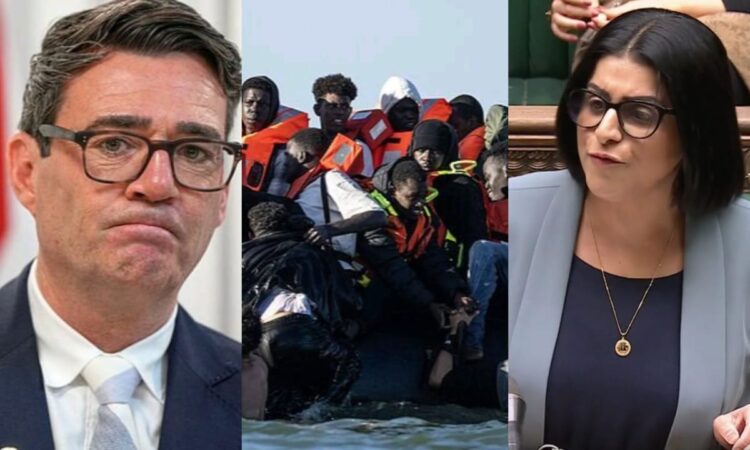
Home Secretary Shabana Mahmood has disagreed with Andy Burnham over claims that Brexit is one of the main reasons Britain is struggling to send asylum seekers back to European countries.
Mahmood explained that even when Britain was part of the European Union, the government was unable to return large numbers of migrants under the Dublin Regulation, which allowed EU countries to transfer certain asylum seekers to other member states responsible for handling their claims.
Her comments have raised fresh questions about whether closer cooperation with the European Union would help Britain deal with the growing number of migrants crossing the English Channel in small boats.
Speaking to GB News, Mahmood admitted that the previous European system had not been particularly successful for Britain. She explained that many European countries were also struggling to return migrants because governments were generally unwilling to accept people being transferred from other countries.
According to the Home Secretary, this problem existed long before Brexit and continues to affect European countries today.
She said that although the European Union is working on a new asylum agreement, there is still no effective system allowing countries to return large numbers of migrants to one another.
Her comments came after Andy Burnham argued that Britain’s departure from the European Union had made it harder to deal with the small boats crisis.
Burnham suggested that migrants were more willing to attempt dangerous Channel crossings because they knew Britain could no longer return them to European countries as easily as before.
He argued that the loss of previous agreements had weakened Britain’s ability to control irregular migration and suggested that closer cooperation with Europe could help address the problem.
However, Mahmood challenged part of that argument by pointing out that the old system had never resulted in large numbers of migrants being returned from Britain.
Figures show that between 2016 and 2020, Britain returned only 1,253 migrants to European countries under the Dublin system. During the same period, 3,830 people were transferred from European countries into Britain.
These figures suggest that Britain received more people through the arrangement than it sent back.
Former Border Force chief Tony Smith also criticised Burnham’s argument, saying it was misleading to suggest that Brexit alone caused the small boats crisis.
Smith argued that the Dublin system had never worked particularly well for Britain and expressed doubts that the European Union’s new asylum agreement would solve the problem.
The disagreement comes as the Labour government faces increasing pressure to reduce Channel crossings and speed up the removal of people who have no legal right to remain in Britain.
Since small boat crossings began attracting significant attention in 2018, fewer than 10,000 people who arrived by this route have reportedly been removed from the country.
According to the figures cited in the report, this represents less than five per cent of those detected arriving in small boats.
The situation has placed additional pressure on Britain’s asylum system, with the cost reportedly reaching £4.35 billion last year.
The government has also faced criticism over the relatively small number of migrants being returned to their countries of origin.
Figures previously reported by the Daily Express showed that more small boat migrants had been returned to Ireland than to some countries from which large numbers of asylum seekers originate.
According to those figures, 57 people were returned to Ireland, compared with 55 to Syria and 16 to Afghanistan.
The report also stated that three people each had been returned to Somalia, Tunisia and the United States.
These figures have raised concerns about the difficulties Britain faces when trying to remove migrants, particularly those from countries affected by conflict, political instability or serious human rights concerns.
Labour has attempted to address the problem through its migration agreement with France, which allows certain migrants arriving in Britain by small boat to be returned to France under agreed conditions.
The arrangement is intended to discourage dangerous Channel crossings and reduce the influence of people-smuggling gangs.
However, questions remain about whether the agreement can operate on a large enough scale to make a significant difference.
Border Security Commander Duncan Capps told MPs that the returns programme had achieved some success but had not reached the level he had hoped for.
He explained that 1,631 people who entered Britain illegally had been returned under the arrangements he was discussing, including individuals from countries where removals would otherwise have been difficult.
Despite describing the results as successful, he admitted that the number of returns was still below his expectations.
Other figures show that only 3,310 people were removed in the year ending in June, with approximately one-third returned to Albania.
Meanwhile, fewer than 800 people were removed to Afghanistan, Somalia, Eritrea, Iran and Sudan combined, even though more than 21,000 people from those countries arrived during the same period.
The difference between arrivals and removals has added to concerns about whether the government can reduce the number of people remaining in Britain after unsuccessful asylum claims.
Although Mahmood rejected the suggestion that Brexit was entirely responsible for the problem, she acknowledged that leaving the European Union had affected Britain’s ability to share important immigration information with European countries.
Before Brexit, Britain had access to Eurodac, a European database containing fingerprints and other relevant information about asylum seekers and certain migrants entering European countries irregularly.
The system helped authorities identify whether someone had previously applied for asylum elsewhere in Europe.
Mahmood admitted that losing access to these records had made it more difficult for British authorities to track migrants who had travelled through other European countries before reaching the UK.
She said the government was discussing closer cooperation with European partners to improve the sharing of information.
According to Mahmood, better access to migration records could help Britain identify people who had already entered other European countries and improve the government’s understanding of their movements.
She also confirmed that Labour was closely watching the European Union’s new asylum pact to see whether it could offer useful lessons for Britain’s immigration system.
However, she warned that European countries were still struggling to establish an effective system for returning migrants between member states.
The disagreement highlights the different views within Labour about how Britain should tackle irregular migration.
Some believe that rebuilding closer relationships with the European Union would make it easier to manage asylum claims and return migrants.
Others argue that previous European agreements achieved little and that Britain needs stronger domestic immigration controls and more effective return agreements with individual countries.
For now, the government continues to face pressure to demonstrate that its immigration policies can reduce dangerous Channel crossings and increase the number of people removed when they have no legal right to stay.
Mahmood’s comments suggest that although cooperation with Europe remains an important part of Labour’s approach, the government does not believe that returning to arrangements similar to those used before Brexit would automatically solve Britain’s small boats crisis.