Illegal Migrants Met a Young Man on a French Beach, Then Allegedly Did Something Terrible Before Fleeing to the UK by Small Boat

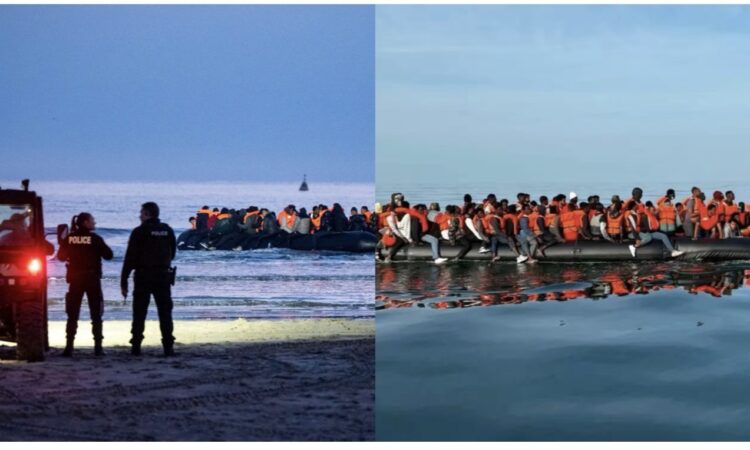
French police are investigating the killing of a young man after he was found stabbed to death on a beach in Berck-sur-Mer, with fears that the people responsible may have escaped to the UK by crossing the English Channel in a small boat only hours after the attack.
The victim, believed to be in his 20s, was discovered on Terminus Beach on Thursday. He had no identification documents, making it difficult for investigators to confirm who he was or where he came from. Witnesses told police that the man had been attacked by a group of other migrants in the sand dunes close to the beach during the early hours of the morning.
According to reports, a violent argument broke out before the victim was stabbed. Investigators later found a knife near his body. French authorities believe the attack happened at dawn, but the body was not discovered until later in the day. By then, they suspect the attackers had already left the area and boarded a migrant dinghy heading for Britain.
The beach where the killing happened was also the departure point for one of the biggest migrant crossings ever recorded. Shortly after the attack, an overcrowded inflatable boat carrying a record 165 migrants set off from the same beach towards the UK. The vessel was reportedly damaged with a puncture and was taking on water, but it continued its journey and was escorted by French rescue boats before eventually arriving in Dover, where everyone on board was processed by UK authorities.
A source close to the French investigation said police believe those involved in the fatal stabbing may have been among the migrants who crossed the Channel that morning. Detectives are now trying to establish exactly who boarded the boat and whether any of the passengers are linked to the killing.
The UK’s National Crime Agency confirmed it is aware of the incident and is working with French authorities. However, officials stressed that the investigation is being led by France while evidence is gathered and those responsible are identified.
The case has sparked strong political reactions in Britain. Critics said it raises fresh concerns about people entering the UK illegally without full identity or security checks. They argued that if the suspects did cross the Channel, it highlights the difficulty of identifying everyone arriving by small boats.
Shadow Home Secretary Chris Philp described the reports as shocking, saying it would be deeply worrying if people suspected of a serious violent crime were able to enter the UK in this way. Reform UK leader Nigel Farage also said the case reflects warnings he has made for years about illegal crossings and the challenges of checking the backgrounds of those arriving without documents.
The killing happened on a long stretch of coastline west of Calais, an area where thousands of migrants gather while waiting for opportunities to cross the Channel. French prosecutors in Boulogne-sur-Mer have opened a formal judicial investigation into the death but have not released many details because inquiries are still ongoing.
Police officers were already patrolling the area that morning in an attempt to stop migrant boats from launching. Despite their efforts, the large inflatable boat carrying 165 people managed to leave the beach. At least two other migrant boats also crossed the Channel on the same day, taking advantage of calm weather conditions.
More than 500 migrants crossed the Channel during the two-day period, adding to this year’s total, which has now passed 13,000 people. The continued crossings have increased pressure on both the UK and French governments to strengthen efforts against illegal migration and the criminal gangs organising the journeys.
Former Metropolitan Police Detective Chief Inspector Mick Neville said the incident shows how the small boat crisis is increasingly linked to serious organised crime. He argued that police already face significant pressure dealing with crime in Britain and warned that cases involving suspects linked to violent offences committed abroad could place even greater demands on law enforcement.
This is not the first time deadly violence has been linked to migrant camps in northern France. Earlier this year, an Eritrean migrant was stabbed to death during a fight in Calais involving people hoping to reach Britain. In another case, a man was shot dead near Dunkirk in what investigators believed was connected to people-smuggling gangs.
A separate shooting also left a Sudanese man dead while a woman and child were injured. French authorities believe many of these attacks are connected to criminal smuggling networks settling disputes over money or unpaid crossing fees.
Police say migrants are often charged between £1,500 and £5,000 for a place on a small boat crossing, making the trade highly profitable for organised criminal gangs operating along the northern French coast.
In a separate development, a 19-year-old man from South Sudan has been charged with endangering life at sea after allegedly steering the overcrowded dinghy carrying 165 migrants. He is due to appear before magistrates in Kent to face the charge.