
Muslim Woman Breaks Down After Receiving 100 Lashes as Flogger Appears to Offer Her Support During Sharia Punishment — Here’s What She Did

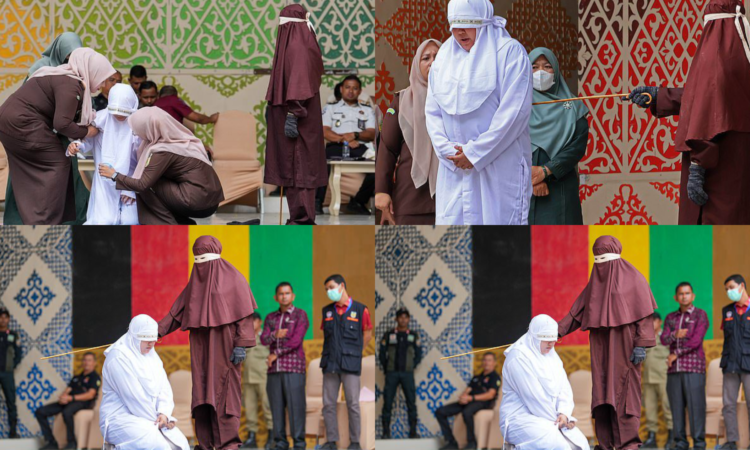
Four people convicted of adultery in Indonesia’s conservative Aceh province have each been sentenced to 100 lashes in a public caning that drew large crowds, with disturbing scenes showing one of the women receiving apparent support from the official carrying out the punishment.
The four were among 11 people publicly punished at Bustanul Salatin Park in Banda Aceh, the capital of Aceh, on Thursday, August 20, 2026. They were found guilty of zina, meaning illicit sexual intercourse, under Aceh’s Qanun Jinayat Islamic criminal code and were each ordered to receive 100 strokes of the cane.
The punishment was carried out in front of officials and members of the public. Some people in the crowd, including children, were reportedly heard shouting for the caning to be harder as the punishment continued.
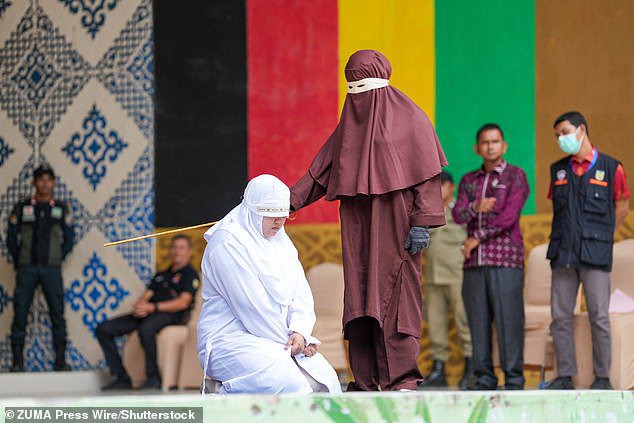
Images from the event showed one woman kneeling on a raised platform while the cane was repeatedly brought down across her body. She appeared to be in considerable pain as the punishment continued, while officials remained nearby.
At one point, the algojo, the person responsible for carrying out the caning, leaned towards the woman and appeared to quietly offer her words of encouragement or support. The moment stood out because of the severity of the punishment, with the official appearing to acknowledge the woman’s distress while the public punishment continued.
Afterwards, the woman was seen crying and struggling with the effects of the punishment. An official helped support her and she was given water as she appeared weak. Other images showed officials assisting people who had difficulty standing after receiving their sentences.

A male convict was also photographed grimacing in pain as the cane struck his back. The scenes highlighted the physical suffering involved in a punishment that remains legal under Aceh’s regional Islamic criminal code.
The four people sentenced to 100 lashes for adultery were not the only individuals punished that day. A total of 11 people were caned for different violations of Aceh’s Sharia-based criminal regulations.
Four others received 22 lashes each for what authorities described as physical intimacy, an offence that can include acts such as hugging or kissing between people who are not married to each other. Two people received seven lashes each for getting too close to one another, which can include holding hands, while another man was given 20 lashes for consuming alcohol.
Aceh is the only province in Indonesia that is allowed to enforce its own form of Sharia-based criminal law. Public caning remains one of the most controversial punishments under the province’s Qanun Jinayat code.
The punishment can be imposed for a number of offences, including gambling, alcohol consumption, sexual relations outside marriage and certain forms of same-sex conduct. Supporters argue that the law reflects Aceh’s religious and cultural values, while critics say public corporal punishment is cruel, humiliating and incompatible with basic human rights.
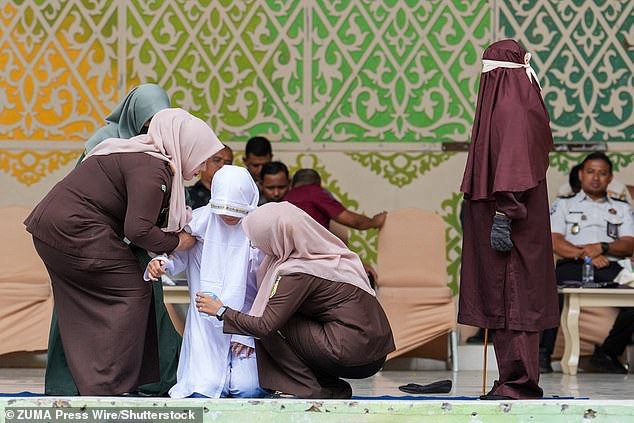
The public nature of the punishment is also intended to serve as a warning to others. Canings are often carried out in public areas, allowing members of the community to watch as offenders receive their sentences.
Human rights organisations have repeatedly criticised the practice. Groups including Amnesty International and Human Rights Watch have condemned public caning in Aceh, arguing that corporal punishment can cause serious physical and psychological harm and conflicts with Indonesia’s wider human rights obligations.
The latest punishment comes only weeks after another highly controversial caning in Aceh involving a woman accused of violating the province’s rules during a TikTok livestream.
In that case, the woman and her partner were accused of kissing while appearing together on a livestream. Authorities said the couple had violated Aceh’s rules concerning physical intimacy between unmarried men and women.
The woman was sentenced to 21 lashes. Images from the punishment showed her kneeling as a masked officer repeatedly struck her back. She appeared to scream in pain before eventually collapsing.
At one stage, the woman was seen clutching her back and falling to the ground, prompting another woman nearby to rush forward and help catch her. She was then left lying on the ground while a medic examined her to determine whether she was fit to continue.
Police officers and other officials watched from nearby as the punishment took place. It remained unclear exactly how many lashes she had received before losing consciousness.
Her male partner was also punished in connection with the same incident, while several other people received lashes for separate offences.
Muhammad Rizal, the head of the city’s Sharia police, said the couple had been reported after people saw them kissing during the TikTok livestream. Authorities investigated the incident and concluded that they had violated Aceh’s Islamic regulations.
The case attracted criticism because it involved conduct taking place on social media rather than a traditional public setting. Amnesty International Indonesia described the punishment as discriminatory and argued that Aceh’s Islamic criminal code was being extended into the digital sphere.
The criticism has added to a wider debate about whether public caning should continue in Aceh.
The latest punishment is also not an isolated event. Earlier in May, authorities caned two men and two women 100 times each after they were convicted of having sexual relations outside marriage. Five other people were also punished for separate violations, including alcohol consumption and being in prohibited proximity to members of the opposite sex.
Another couple received 27 lashes for physical intimacy, while two men were punished with 29 and eight lashes respectively for gambling.
Under Aceh’s rules, some offences can result in even harsher punishments. Child rape is among the most serious offences covered by the province’s criminal code and can carry a sentence of up to 200 strokes, alongside possible imprisonment or a fine.
Although caning is not a form of punishment used across Indonesia, it remains permitted under Aceh’s special legal status and continues to have support among some sections of the local population.
The law has also created a difficult situation when a person becomes too weak or injured to continue. If someone is considered medically unfit during a caning, the remaining strokes can be postponed until the person has recovered sufficiently to complete the sentence.
The images from Thursday’s event have once again drawn attention to the harsh reality of public caning in Aceh, where convicted offenders can be punished in front of crowds while officials monitor the proceedings. For critics, the physical pain, public humiliation and emotional distress make the practice deeply troubling, while supporters continue to defend it as part of the province’s religious legal system.