Obama takes rare swipe at JD Vance over comments related to Michelle Obama’s background

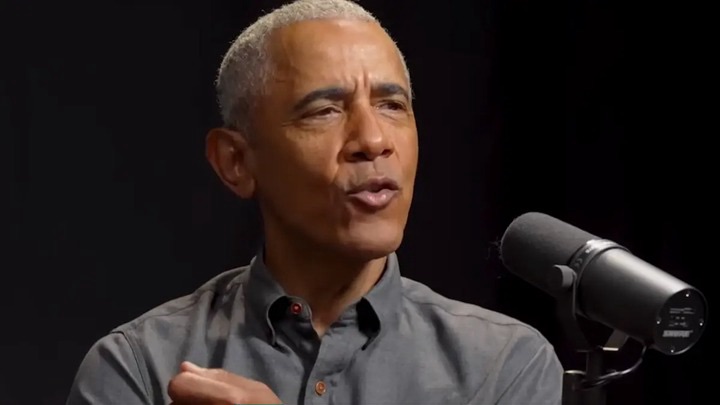
Former President Barack Obama has publicly criticized Vice President JD Vance over his views on immigration, arguing that Vance’s own family background makes his comments difficult to reconcile. Speaking during an interview on Malcolm Gladwell’s podcast, Obama questioned Vance’s recent remarks about who has the strongest claim to being American and suggested that they conflicted with the reality of his personal life.
The discussion focused on the lasting effects of the Reconstruction era after the American Civil War and how it continues to shape debates about citizenship, race and democracy in the United States. During the conversation, Gladwell asked Obama about the current state of America’s multiracial democracy and whether the country had made lasting progress.
Obama responded by saying he believes one of the country’s two major political parties has increasingly embraced a message that implies the phrase “we the people” applies only to a certain group of Americans rather than everyone. He argued that this kind of political language risks dividing the country instead of bringing people together.
He then turned his attention directly to JD Vance, saying the vice president had delivered what he described as a “blood and soil” version of patriotism. Obama said Vance appeared to suggest that a person’s claim to America depends on who their parents were and how long their family has lived in the country. Obama pointed out what he saw as an irony, noting that Vance is married to the daughter of immigrants.
Vance’s wife, Usha Vance, was born in the United States to parents who immigrated from India. Because she was born on American soil, she automatically became a U.S. citizen under the country’s birthright citizenship laws. The immigration status of her parents at the time of her birth has never been publicly confirmed.
The comments Obama referred to are widely understood to relate to a speech Vance gave in 2025 at the conservative Claremont Institute. During that speech, Vance argued that America is defined by a shared set of values and traditions. He also said that the descendants of those who fought in the Civil War have a much stronger claim to the country than people who argue they do not belong.
Vance has undergone a significant political transformation over the past decade. Once known for criticizing Donald Trump during the 2016 presidential campaign, he has since become one of Trump’s closest allies and one of the Republican Party’s leading MAGA figures.
He has also been outspoken in opposing birthright citizenship. After the U.S. Supreme Court rejected an effort by the Trump administration to limit automatic citizenship for some children born in the United States, Vance criticized the decision, calling it a “huge mistake.” The administration had argued that children born to parents who were not U.S. citizens should not automatically receive citizenship, but the court ruled against that position, pointing to the wording of the U.S. Constitution.
Obama and Gladwell also discussed the importance of the 14th Amendment, which was adopted after the Civil War. The amendment granted citizenship, equal protection under the law and other constitutional rights to formerly enslaved people and established the principle that nearly everyone born in the United States is an American citizen.
Supporters of birthright citizenship argue that it is a fundamental constitutional protection that has helped define American democracy for more than a century. Critics, however, believe the policy is sometimes abused by people who travel to the United States specifically so their children can obtain American citizenship through birth.
During the conversation, Obama reflected on how dramatically the country has changed over time. He noted that, decades ago, before the Supreme Court legalized interracial marriage nationwide, it would have been almost unimaginable for a vice president to deliver a speech emphasizing national identity while being married to a woman of Indian heritage. Referring to what he viewed as that contradiction, Obama remarked that “hypocrisy is progress.”
Despite his criticism of the current political climate, Obama ended the interview on an optimistic note. He said he remains confident that the progress America has made toward becoming a more diverse and inclusive democracy will endure. He added that he refuses to become cynical because he believes the country has already shown it is capable of becoming a better version of itself, saying Americans have seen that progress with their own eyes.