Nigel Farage Says the Royal Navy Can Stop Small Boats and Return Migrants to France, But Experts Reveal a Chilling Reason It May Never Work

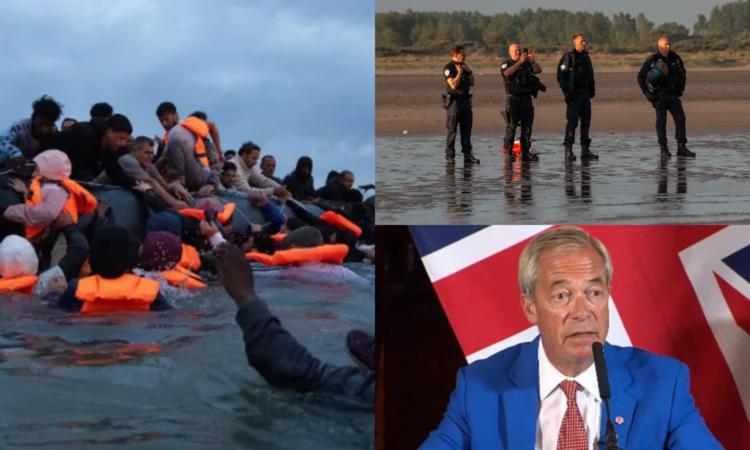
Reform UK has promised to use the Royal Navy to stop small boats crossing the English Channel and take the migrants back to France. However, experts say the plan would be much harder to carry out than it sounds.
Nigel Farage said the operation would be the biggest military mission in the Channel since the Second World War. The party has named the proposal “Operation Fortress” and Farage insists it would not break international maritime law.
Since Andy Burnham became Prime Minister last month, more than 2,000 migrants have crossed the Channel in small boats. Even so, the total number of crossings this year is reported to be 43% lower than during the same period in 2025.
Military and legal experts have raised serious concerns about the proposal. Professor Kevin Rowlands, who has experience with European naval operations against people smugglers, said the idea may sound strong, but it does not fit well with international maritime law, national borders or the way modern Royal Navy warships are designed. He explained that large warships are not built to stop small inflatable boats in one of the world’s busiest shipping lanes.
He also warned that the Royal Navy already has major responsibilities around the world. According to him, Britain’s naval forces are already under pressure because of growing threats from Russia and other international security challenges. He argued that taking sailors away from those duties to deal with migrant crossings would weaken the Navy’s main role of protecting the country.
Former First Sea Lord Admiral Lord West also questioned whether the plan could work. He said it would depend on France agreeing to accept migrants back, something he believes is very unlikely. He added that if such an operation ever happened, it would probably involve smaller patrol boats and Border Force vessels rather than large warships, but it would still require a significant number of trained personnel.
Andrew Fox, a former Army officer and conflict analyst, warned that trying to stop overcrowded migrant boats at sea could put lives in danger. He said a warship cannot safely force a small dinghy to change direction because any sudden movement or waves could cause the boat to capsize. He also warned that sending boarding teams alongside overcrowded boats could make frightened passengers move suddenly, increasing the risk of people falling into the water.
France has already rejected the idea. A spokesperson for the French Interior Ministry said British military vessels returning migrants to France without permission would violate French sovereignty as well as international and maritime law. Officials also pointed out that the number of Channel crossings has fallen during 2026.
Experts also warned that if Britain tried to return migrants without France’s agreement, it could seriously damage relations between the two countries. They said France could stop sharing intelligence and reduce cooperation on beach patrols that currently help tackle people-smuggling gangs.
International law also places obligations on ships at sea. Any vessel that finds people in danger must help them, no matter where they come from or whether they are migrants. Experts say that without France’s permission, the Royal Navy could end up rescuing people at sea and bringing them to the UK instead of taking them back to France.
Britain has tried a similar approach before. In 2022, the Royal Navy took charge of Channel patrols under Operation Isotrope. The aim was to stop uncontrolled migrant landings, but the operation still coincided with record numbers of small boat arrivals. During that mission, the Navy made clear it would not carry out dangerous pushbacks at sea, and later trials found that forcing boats to turn around was not practical or safe.