I’m a Muslim Who Has Lived in This Country for 20 Years—This Is What Must Be Done to Protect Muslims Facing Threats Because of Their Religion

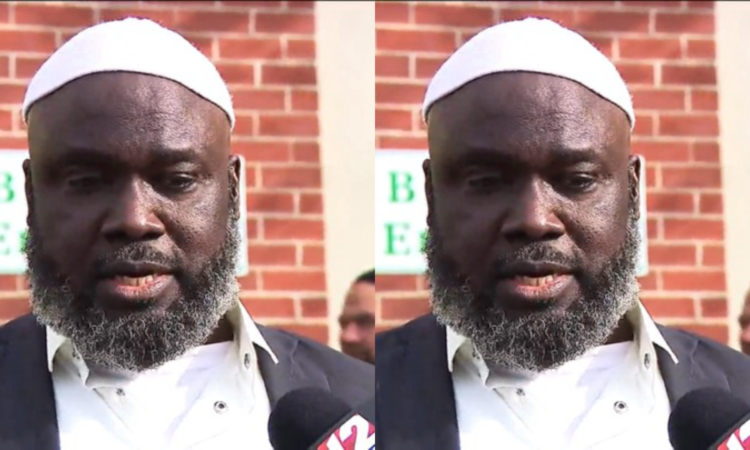
A Muslim scholar living in Scotland has called for urgent action as attacks and hatred directed at Muslims continue to rise across the UK.
Paigham Mustafa, who says he has been living under the threat of a religious ruling against him for more than 20 years, believes the country needs an honest national conversation about Islam. He said many people do not understand what the religion truly teaches and that this lack of knowledge is helping fear, prejudice and division to grow.
Mustafa is also calling for better education about Islam in schools and across wider society. He believes that teaching people about the religion through trusted scholars and reliable information could reduce harmful stereotypes and help people from different backgrounds live together peacefully.
His comments come amid serious concern about the number of attacks on Muslim communities and places of worship. Around 70 mosques were reportedly attacked across the UK during the past year. That is equal to approximately one attack every five days.
Official Home Office figures also show that hate crimes targeting Muslims in England and Wales increased by 19 per cent in the year ending March 2025. A record 4,476 incidents were reported during that period. However, the real figure could be higher because some victims may be too frightened to report what happened or may believe that no action will be taken.
Amnesty International recently warned that Islamophobic attacks across the UK were reaching “emergency levels.” Mosques and Muslim community buildings have reportedly faced vandalism, threats, intimidation and attempted arson. Individual Muslims have also experienced verbal abuse, harassment and physical attacks.
Mustafa said the rise in anti-Muslim hatred should not be ignored or treated as a problem affecting only one community. He argued that attacks on people because of their faith damage society as a whole and weaken trust between communities.
He said Britain urgently needs a national discussion about what Islam actually teaches so that the growing atmosphere of fear and hostility can be challenged.
According to Mustafa, one of the biggest problems is that Islam is often presented by people who do not properly understand or follow its teachings. He said extremists sometimes twist the religion from within, while people who dislike Muslims misrepresent it from outside.
He believes the true message of the Quran, including peace, justice, mercy and respect for human dignity, can easily become lost between these two sides. This can leave ordinary Muslims feeling that their beliefs are being wrongly judged because of the actions or statements of others.
Mustafa said people should be encouraged to learn about Islam from authentic sources instead of depending only on frightening social media posts, sensational news reports or the words of extremist groups. He believes greater understanding could help replace fear with knowledge and turn hostility into respectful discussion.
His appeal is also shaped by his own experience. Mustafa says he has lived under a fatwa for more than two decades because of his belief that Islam should return directly to the teachings of the Quran. The ruling was reportedly connected to Glasgow Central Mosque, and he says it created a serious and lasting threat to his personal safety.
In 2023, Mustafa claimed that police had not dealt properly with the danger he believed he was facing. His complaint followed Police Scotland’s acknowledgement of institutional discrimination within the organisation.
Police Scotland previously said in 2021 that hate-crime legislation did not apply to Mustafa’s case because the law required evidence of an intention to encourage hatred against a group, rather than threats directed at one person.
Mustafa questioned whether this interpretation leaves individuals with enough legal protection when threats are linked to powerful organisations or religious institutions. He believes no person should be left feeling unsafe simply because the law does not clearly cover the circumstances of their case.
With Mawlid al-Nabi, the commemoration of the birth of the Prophet Muhammad, approaching, Mustafa believes the occasion could provide an important opportunity to begin the national conversation he is requesting.
He said the event should not only be a time of celebration for Muslims but also an opportunity to explain the values that the Prophet Muhammad taught, including mercy, justice, kindness and respect for others.
Mustafa believes education is one of the strongest ways to fight hatred. In his view, when people learn about Islam through honest discussion and genuine scholarship, they are less likely to fear Muslims or believe misleading claims about the religion.
He said misunderstanding allows prejudice to grow, while knowledge creates opportunities for people to speak to one another and find common ground. He is now urging political leaders, schools, religious organisations, police forces and members of the public to take the rise in anti-Muslim hatred seriously before the situation becomes even worse.
“The antidote to hatred is understanding,” Mustafa said. He added that when people encounter Islam through authentic scholarship instead of sensational headlines and social media posts, fear can be replaced by knowledge and division can give way to meaningful dialogue.