Donald Trump Finally Pulls Back the Tarp Hiding His Biggest Washington Secret — And the Shocking Change Has Critics Erupting

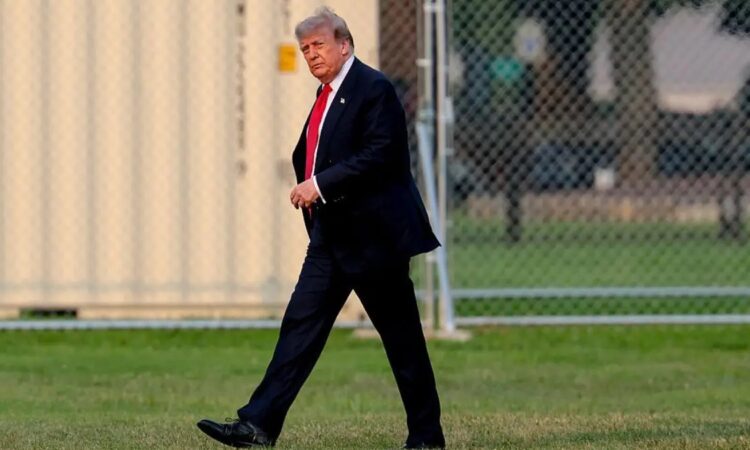
President Donald Trump is continuing his efforts to reshape Washington, D.C., with a series of renovation projects that reflect his own personal style. Since returning to office for his second term, he has expanded his focus beyond the White House, putting his mark on some of the country’s most famous landmarks. While supporters see the projects as improvements to the nation’s capital, many critics believe they are unnecessary and far too expensive.
Trump has now revealed what some people have described as one of his biggest Washington makeover projects, but instead of praise, the announcement has sparked fresh criticism online. Many people questioned whether the money could have been better spent on other priorities while Americans continue to face financial pressures.
Among the projects Trump has supported are changes to the John F. Kennedy Center for the Performing Arts, restoration work at the Lincoln Memorial Reflecting Pool, and a proposal for a large Triumphal Arch near Arlington National Cemetery. His latest attention has been directed at four historic bronze equestrian statues that stand at the entrance to Arlington Memorial Bridge in West Potomac Park.
The statues, known as The Arts of War and The Arts of Peace, were first installed in 1951 and are among Washington’s well-known historic landmarks. Trump recently shared several photographs of the restoration work on his Truth Social account, showing the statues surrounded by scaffolding while construction crews continued their work.
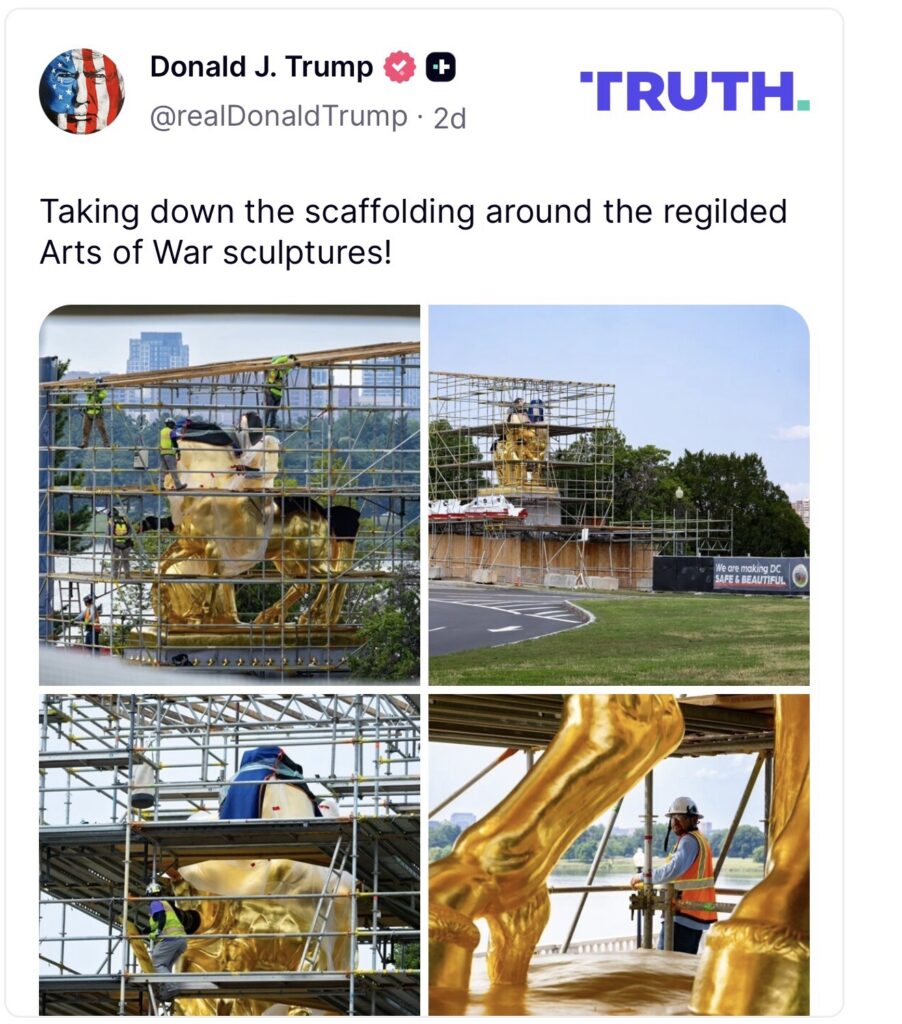
Alongside the pictures, Trump celebrated the progress by writing that the scaffolding was being removed from the newly restored sculptures. The images showed workers wearing hard hats and high-visibility clothing standing on platforms around the statues, while temporary wooden barriers had been placed around the base to keep visitors away from the construction area.
The most noticeable feature in the photos was the statues’ bright gold appearance, which stood out sharply against the surrounding metal scaffolding and unfinished work areas. The project involves covering the sculptures with 23.75-karat gold leaf, giving them a shiny finish that closely matches Trump’s long-known preference for gold decoration.
Trump first announced the restoration in June, saying he expected the work to be completed by July 3. However, that deadline passed before the project was finished. He later explained that skilled gilding experts from around the country had been brought in to complete the detailed work, and he eventually shared updated photos showing the progress.
According to reports, the National Park Service awarded a contract worth around $5.1 million to Gilders’ Studio to carry out the restoration. Work reportedly began last month and is expected to continue until September. Interior Secretary Doug Burgum has also played an important role in overseeing changes to the project.
The gold restoration quickly became a major talking point on social media, where many users criticised both the appearance of the statues and the cost of the work. Some argued that the bright gold finish looked excessive and did not suit historic monuments, while others questioned whether taxpayers should be paying for such expensive restoration projects.
One social media user claimed Trump was making Washington look overly flashy, while another simply questioned why the statues needed to be changed at all. Others asked whether public money had funded the project and argued that the government should instead focus on issues affecting ordinary Americans.
Some critics also predicted that the new gold covering would not remain in good condition for long, suggesting it could eventually peel or wear away. Others joked that the project seemed so unbelievable it sounded more like a comedy sketch than real government business.
Democratic politicians also criticised the restoration. Several argued that while many Americans are struggling with the cost of living, the administration should not be spending millions of dollars on decorative projects that reflect the president’s personal taste.
Over the past 17 months, Trump has become increasingly focused on redesigning parts of Washington with the gold styling that has long been associated with his hotels, private properties and business brand. That same style has also appeared inside the White House, where the Oval Office has been fitted with numerous gold decorations and ornaments that immediately catch visitors’ attention.
During a tour of the Oval Office, even Fox News host Laura Ingraham appeared surprised by the amount of gold throughout the room. Trump defended the design, saying there was no substitute for real gold and insisting the decorations were genuine rather than inexpensive imitations. When Ingraham jokingly asked whether they had come from Home Depot, Trump laughed and replied that they certainly had not.
The statue restoration is only one of several Washington projects that have attracted political attention. Earlier this year, Democratic Senator Adam Schiff opened an inquiry into whether National Park Service maintenance funds had been redirected to help pay for some of the administration’s renovation plans.
Schiff, along with several other Democratic senators, also sent a letter to Interior Secretary Doug Burgum expressing concern about what they described as a lack of transparency surrounding the projects. They questioned whether taxpayer money was being spent appropriately and called for a detailed breakdown of the costs, warning about the possibility of waste, fraud and abuse in funding the president’s extensive makeover plans for the nation’s capital.