
Democrats Formally File 25th Amendment Bill to Get Rid of Donald Trump in a Shocking Way

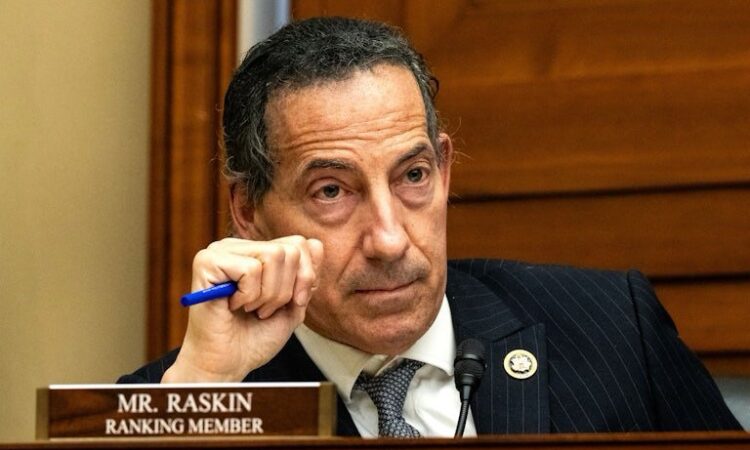
A group of Democrats in the House of Representatives has taken a serious step by introducing a bill aimed at examining whether Donald Trump is mentally and physically capable of continuing as president. The move reflects growing concern among some lawmakers who believe his recent actions and statements raise questions about his ability to lead the country safely.
The proposal is backed by around 50 Democratic lawmakers and was led by Representative Jamie Raskin, a senior member of the House Judiciary Committee. Their plan is to create an independent body called the “Commission on Presidential Capacity to Discharge the Powers and Duties of the Office.” This commission would be tasked with carefully reviewing the president’s condition and determining whether he is still able to perform the responsibilities of the job.
As part of its role, the commission would have the authority to arrange a full medical evaluation of the president. This would include both physical and mental health checks to assess whether he can properly carry out the duties required of him. The idea is to have a more structured and formal process, rather than relying only on political judgment or public opinion.
The bill is based on powers allowed under the Twenty-Fifth Amendment, which outlines what should happen if a president is unable to serve. Normally, that process would involve the vice president and members of the Cabinet deciding whether the president is unfit. However, the amendment also gives Congress the option to create another group to make that decision. This proposal uses that part of the law, effectively reducing the role of Vice President JD Vance in the early stages of the process.
Raskin strongly defended the need for the bill, saying that public trust in Trump’s leadership has dropped to unusually low levels. He pointed to several controversial moments, including Trump’s aggressive rhetoric on global issues, particularly in the Middle East, and accusations that he has acted without proper approval from Congress when it comes to military matters. Raskin also criticized Trump for attacking the Pope publicly and for sharing online content that portrays himself in religious imagery, which many people found inappropriate and alarming.
According to Raskin, these actions are not just political disagreements but signs of a deeper problem that could pose a risk to national security. He argued that when a president’s behavior becomes unpredictable or unstable, it is the responsibility of Congress to step in and protect the country using the tools provided by the Constitution.
Despite the strong language and urgency from Democrats, the reality is that the bill faces major obstacles. The House of Representatives is currently controlled by Republicans, many of whom are loyal to Trump and are unlikely to support such a measure. Even if the bill somehow managed to pass in the House, it would almost certainly face resistance in the Senate as well.
On top of that, Trump himself would likely veto the bill if it reached his desk. Overriding a presidential veto requires a two-thirds majority vote in both the House and the Senate, which is extremely difficult to achieve, especially in a deeply divided political environment.
Because of these challenges, many see the bill as more of a political statement than a realistic path to removing the president. It highlights the level of concern among Democrats and keeps the issue in the public eye, but the chances of it actually leading to Trump being removed from office remain very slim.