Donald Trump Says He’s ‘Entitled’ To ‘Millions Of Dollars’ In Gifts — And It Got 1 Hilarious Reaction

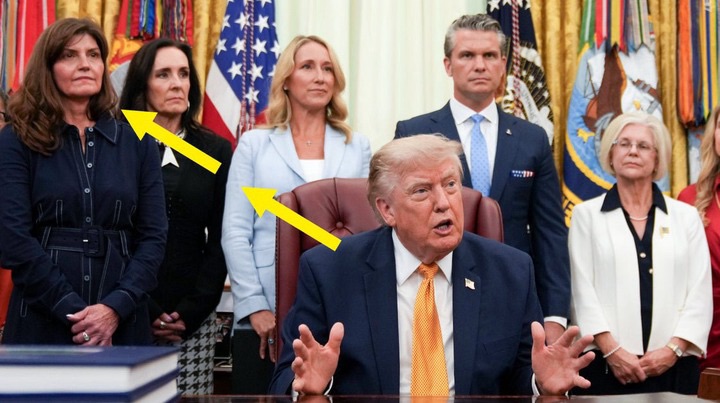
The executive director of President Donald Trump’s newly created military family commission appeared to give a revealing reaction when the president jokingly suggested that he should be allowed to keep money and gifts sent to him by members of the public.
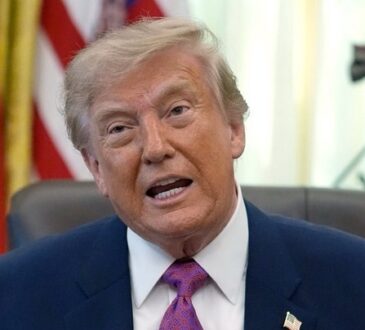
The moment happened in the Oval Office on Monday as Trump signed an executive order establishing the President’s Military Spouse Commission. The new advisory group is expected to examine the difficulties faced by military spouses and families and recommend ways the government can provide them with better support.
Jennifer Rauchet, the wife of Defense Secretary Pete Hegseth, was chosen to chair the commission. Desiree Thompson Sayle, who worked as an aide to Trump during his first term in office, was appointed as its executive director.
During the signing ceremony, Sayle spoke briefly about the commission and what it hoped to achieve. After she finished her remarks, Trump began talking about how long she had worked with him and described one of her previous responsibilities.
“We have Desiree, who’s been with us for a long time,” Trump said. He explained that she dealt with messages and items sent by members of the public, including letters, gifts and small amounts of money.
According to Trump, the donations and gifts could eventually add up to millions of dollars. He said the money was either returned to the people who sent it or given to charitable causes.
Trump then jokingly questioned why he was not allowed to keep it himself.
“They send it to me! I should be able to get it!” he declared.
People gathered inside the room laughed at the remark, apparently treating it as a joke. However, Sayle’s response quickly attracted attention. Standing behind the president, she could be seen shaking her head and silently mouthing the word “no.”
Trump continued with the joke, raising his hands as he complained that Sayle would not hand the money over to him.
“She won’t give it to me. I should be entitled to it,” he said.
The president later made it clear that he was not seriously asking to keep the gifts or money. After apparently noticing Sayle’s reaction, he also said “no” and indicated that he was only joking.
The exchange created an unexpected moment during what was supposed to be a formal ceremony. Although Trump delivered the joke, many viewers believed Sayle’s silent response became the real punchline because she immediately rejected the suggestion without saying anything aloud.
Trump then changed the subject and encouraged Sayle to compare him favourably with former President Joe Biden. After receiving the answer he appeared to want, the president moved on with the ceremony.
Under federal rules, presidents and other government officials face restrictions on accepting personal gifts connected to their public positions. Gifts sent by members of the public normally have to be handled through official procedures rather than simply being treated as the president’s private property.
The ceremony was mainly intended to highlight the challenges faced by military families. Military spouses can struggle to maintain careers because their partners are regularly transferred between bases. Families may also experience problems involving childcare, housing, healthcare, education and long periods of separation when service members are deployed.
The new commission is expected to advise the president on these concerns and explore practical ways to improve the lives of military spouses and their children. However, Trump’s unexpected comments about gifts and money briefly shifted attention away from the commission’s official purpose, while Sayle’s visible reaction became one of the most widely discussed moments from the event.