Lee Anderson Exposed Deep Secrets About Illegal Boat Migrants Based on His Personal Views and Experiences at the English Channel With French Police Officers

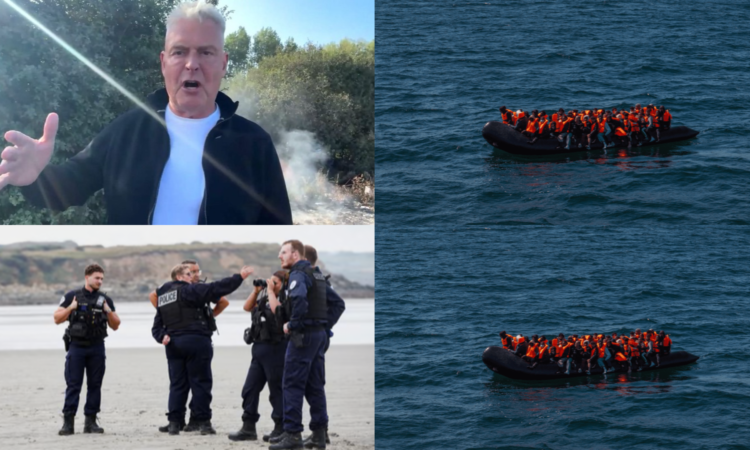
Reform UK Chairman Lee Anderson has visited a migrant camp in northern France, where he says armed French police stopped him and his team just minutes after they arrived.
Speaking live to GB News from Loon-Plage, near the northern French coast, Anderson said he had travelled there to see for himself what was happening around the migrant camps and the beaches where many small boats begin their journey across the English Channel.
He claimed that only a few minutes after arriving at around 4am, French police officers approached his group. According to Anderson, the officers were heavily armed, carrying tear gas, and asked everyone to show identification. He said journalists in the group were also told to show their press passes before officers stopped them from going onto the beach.
Anderson said he was surprised by how quickly the police responded to his presence. He questioned why, in his view, the same level of action is not always taken to stop migrant boats from leaving the French coast.
During the interview, presenter Ellie Costello asked Anderson about Reform UK’s proposal to use the Royal Navy in the English Channel. She also raised criticism from French officials, who argue that such a move could break international law and violate France’s sovereignty.
Anderson rejected those claims. He insisted the plan would be legal and described it as a humanitarian rescue mission rather than a military operation.
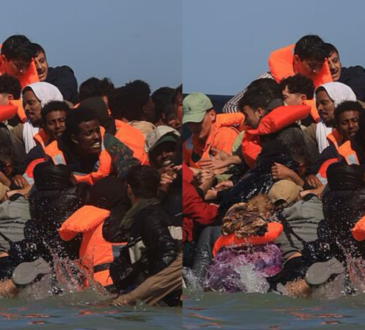
He argued that once overcrowded inflatable boats leave the French shoreline, the people onboard are immediately at risk of serious danger or even drowning. He said the aim would be to rescue those onboard and safely return them to France instead of allowing them to continue to the UK.
Anderson also said Britain has already spent nearly £1 billion helping France tackle illegal Channel crossings over recent years. He argued that if the French government genuinely wants to stop the crossings, it should work more closely with the UK to prevent them.
Describing what he saw during his visit, Anderson said the migrant camp between Calais and Dunkirk was large and that the living conditions were extremely poor.
He said his team had been on the beach early in the morning looking for possible boat launches. Although they did not witness any crossings, he claimed they found signs that boats had recently left the area, including a damaged inflatable dinghy abandoned on the beach.
Afterwards, they visited one of the nearby migrant camps, where Anderson said there were piles of rubbish, bonfires burning and many people living in dirty and overcrowded conditions. He also said they saw aid workers from non-governmental organisations operating in the camp.
According to Anderson, many of the migrants had travelled thousands of miles from their home countries and were now living in difficult conditions while waiting for an opportunity to cross the English Channel.
He questioned why people staying in the camps were not instead claiming asylum in France before attempting to reach Britain.
Responding to the comments, a Home Office spokesperson said the Government is continuing its efforts to reduce small boat crossings and crack down on illegal immigration.
The spokesperson said the number of asylum claims has fallen by 12%, while removals and deportations of people with no legal right to remain in the UK have reached almost 70,000, representing a 41% increase. The Home Office added that ministers are working to remove the incentives that encourage illegal migration to Britain.