Video Shows Man Interrupting Muslim Men Praying in Public and Telling Them to ‘Go to a Mosque

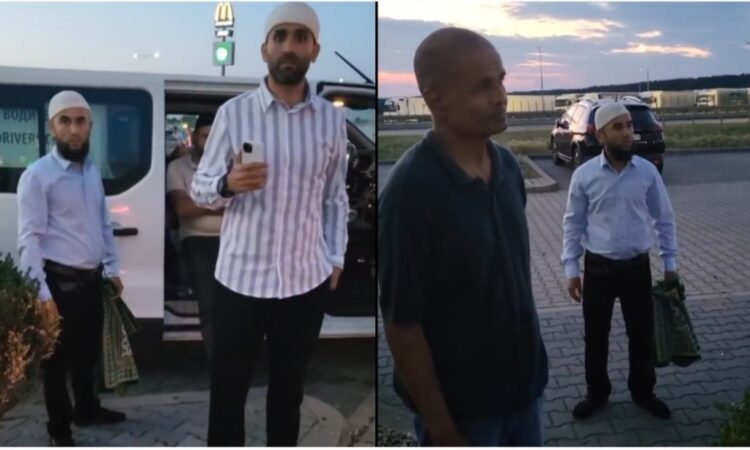
A video that has gone viral on X appears to show a man confronting a group of Muslim men while they are praying in a public place. Muslims pray five times a day as part of their faith, and sometimes they have to pray wherever they are if there is no mosque or prayer room nearby. In this video, the men seem to have stopped during their work to perform one of their daily prayers.
As they pray, a man approaches them and begins shouting. He tells them, “It’s not your place here” and “Go home.” He then continues speaking in Polish before switching to English, saying, “This is a public place. You have a mosque, go to mosque.” He repeatedly argues that they should not be praying there, even though the men appear to be quietly practicing their religion without disturbing anyone.

Sadly, this kind of incident reflects the prejudice that many Muslims continue to face in different parts of the world. Some people hold negative views about Islam because they are unfamiliar with the religion or have been influenced by stereotypes and misinformation. Instead of trying to understand people from different backgrounds, some respond with anger or hostility. Incidents like this can make people feel unwelcome simply because they are practicing their faith.
Throughout the video, the group remains focused on their prayers despite the man’s shouting. He continues telling them to leave and challenges their right to pray in a public space. According to the person who originally shared the video on X, the man also said, “Over my dead body before I let you pray here. You are a guest here.” Eventually, the men leave the area, choosing to drive away rather than continue dealing with the confrontation.
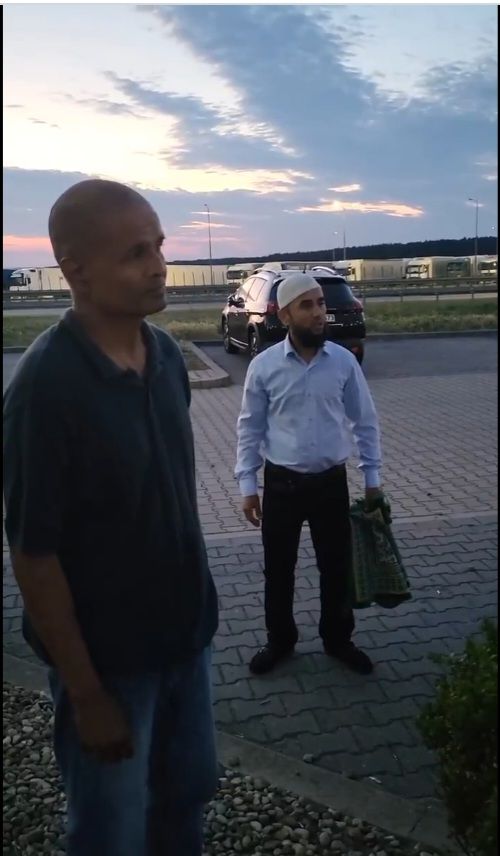
The video is difficult to watch because it shows people being confronted while peacefully practicing their religion. It also highlights a wider problem seen in many places today, where people are targeted because of their beliefs, culture, or appearance. Moments like these often raise concerns about religious tolerance, respect for others, and the importance of allowing people to practice their faith without fear of harassment.
The discussion in the comment section focused on more than just the confrontation itself. Many users questioned whether the incident actually took place in Poland. Some pointed out that the phone numbers displayed on the van appeared to be Lithuanian rather than Polish. One person asked, “Is this for sure Poland? The country code on the van is Lithuania.” Another replied that it could still be Poland because vehicles with Lithuanian registration are commonly seen there, adding that the man in the video was speaking Polish while telling the group to leave his country.
Another commenter claimed they had experienced something similar in the past. They described an encounter with a Polish truck driver who allegedly tried to stop them from praying at a parking area. The commenter said the situation turned into a physical fight after they defended themselves. As with many stories shared online, this personal account could not be independently verified.
Interestingly, although the video was shared by an X account known for posting far-right content, many people in the replies criticized the man’s behavior. Numerous commenters described his remarks as racist, xenophobic, or discriminatory, arguing that people should be free to practice their religion peacefully as long as they are not causing harm to others.
The exact location and date of the video have not been independently confirmed. The Daily Dot reported that it could not verify where or when the incident happened, and its coverage was based on the footage and claims shared by users on X.
Video Below: